

This post is also available in:
 Tamil (தமிழ்)
 Sinhala (සිංහල)
We’ve all been told to eat fewer calories. Consume this amount, burn that amount and there you have it. You know that calories are not the only factor to consider if you’ve ever found yourself getting sleepy and fatigued halfway through a workout. It is important to know when to eat.
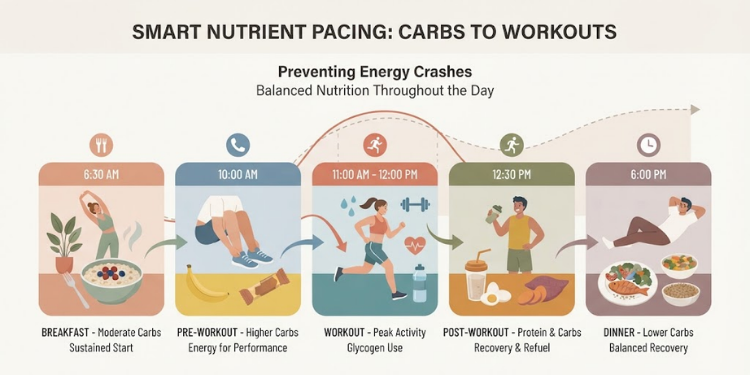
The concept is known as nutrient pacing. It involves planning your meals, particularly carbohydrates, to coincide with your activities and routines for the day as well as your training sessions. In this blog, we discuss how it works and the potential benefits with regard to a regular supply of energy and simple ways to explore that in practice.
So what is Nutrient Pacing?
Nutrient pacing is consuming the appropriate foods at the appropriate time. You focus more of your carbs around the time that you work out, rather than distributing them throughout the day. They tend to diminish when you do not engage in activities that involve action, such as sitting at a desk.
Think of your body as a cell phone. You charge it before and you charge it afterwards. It is not left plugged in 24 hours a day when not in use.

A brief introduction to glycogen
After eating carbohydrates, they are immediately converted to glucose. Some of this glucose becomes glycogen, which is stored in your liver and muscles. Your body’s “quick fuel tank” is glycogen.
Your body accesses this reservoir of fuel during a workout. When the tank is low, you are fatigued, weak and not focused. Your body tries to replenish the tank following exercise. This is termed glycogen replenishment.
After exercise, it’s a good time to replenish since the body’s muscles are in need of glucose. This is where many coaches refer to glycogen windowing.
Why Energy Crashes Happen
Many times after a large meal filled with lots of sugar, a person experiences a low in energy. Your blood sugar rises quickly, your body releases insulin to help lower the blood sugar and you feel exhausted and hungry. Often occurs after eating a large bowl of white rice, a cup of sweet tea, or something like a pastry while sitting quietly.
If you exercise shortly after your meal, you are consuming some of the glucose, which can help counteract the rise. But if you aren’t moving, you can feel sleepy after the same meal. Nutrient pacing attempts to remedy this by shifting the heavier carbohydrate to the place where it is needed.
There are three parts to nutrient pacing
Eat a meal that contains complex carbohydrates and some protein about 1-3 hours prior to training. Foods such as oats, brown or red rice, eggs on sweet potato, or whole grain breads are good choices. For those who are short on time, go for a banana, which is small and light.
2.Post-workout replenishment
Blood Sugar Foods (Carbs & Proteins) should be consumed 1 hour or 2 hours after a workout. Carbohydrates will aid in replenishing glycogen. Protein is used to repair muscles. Fish in a rice bowl or dhal in a rice bowl, a good rice bowl, or a sandwich with chicken and salad.
3.Calm-hour eating
Eat for longer periods of time, and have more high-carbohydrate foods. Consume vegetables, lean protein, good fats and fibre. This can help to keep blood sugar levels stable and one’s mind clear.
Shooting a shot with a simple day example
The following is one person’s schedule for a 6 pm training.
- Breakfast: 1 egg, whole grain and some veggies.
- Lunch: Healthy plate, additional food: vegetables and protein and rice.
- Snack 4.30 pm: Half a banana and/or a small bowl of oats.
- Workout at 6 p.m.
- Dinner at 7.30 pm: More complex carbohydrates, red rice or sweet potato, and fish or chicken or dhal and greens.
You can have someone train very early in the morning and they can wake you up before a snack and after a well-balanced breakfast.

Does it raise the body’s metabolism?
The phrase “nutrient timing” and the effect that “boosts metabolism” can be seen. Handle with care. Science is saying that coaching and training can have a little to do with timing. It’s not a magic switch that will magically turn you from fat to muscle. However, some key factors of nutrition, sleep and activity should not be ignored.
Do not consider nutrient pacing a “magic pill,” but a method to train and feel better.
Tips to Get Started
- Start small. You can begin by making one change and choosing to change one meal, such as your pre-exercise snack meal.
- Choose complex carbs. Foods that take longer to digest are oats, red rice, whole grains, beans and root vegetables.
- Serve protein in all meals. It can help you feel fuller and boost your muscle rebuilding.
- Drink enough water. It is possible for you to become exhausted even from a bit of dehydration.
- Watch your body. Pay attention to how you feel, how hungry you are and your attention. Make adjustments if necessary to fit what is seen.

Common Mistakes
- Cutting carbs completely. They are an essential component of your brain and muscles and are especially important during training.
- Overeating after workouts. Refill is not “big meal” time!
- Skipping meals prior to the long workout. This may result in weakness and dizziness.
- Copying others exactly. Your body, time and objectives are yours.
Final Thoughts
While there are applications of calorie counting, it’s not the end-all, be-all answer, because it only deals with the numbers. Not to mention a nifty technique called “nutrient pacing”, which is asking your body when to feed you. Many find that they feel more stable, more focused, less exhausted by eating carbs at the time of exercise and less weight gain by eating lighter during periods of rest.
Try one thing differently this week and find out how you feel about it. If you have a medical illness, please check with your doctor or dietitian, and/or use any medication first before altering your diet.






















Discussion about this post