



This post is also available in:
 English
  Tamil
Tamil
Your body is forgiving at 25. Warm-up is optional! It’s okay to train while being a little sore. It is perfectly acceptable to sit poorly throughout the day at a desk and then run 5 kilometres in the evening, and not have any problems with that.
The rules change at the age of 35. Gradually and unobtrusively, these things that were okay a few years ago begin to mark. A sharp pain in the knee that subsides after a couple of days from leg day. Lower back pain after extended driving or sitting times. A clicking and catching shoulder. Hips feel stiff, but it takes half a day to get going in the morning.
This is not an injury. This isn’t the aging gone wrong. This is what happens to the body when there is no foundation of joint-protective strength, which is the situation of most Sri Lankan adults over 35, whose typical daily routine involves a desk job, long commute, and a heavy rice meal.
The positive is that it is totally constructable. You can begin to build it now with a simple, joint-safe functional circuit that can be done without a gym, heavy equipment, or knee-grinding, back-straining movements.
Why Your Core is the Solution to Your Knee and Back Pain
Commonly, the majority of Sri Lankans with knee pain believe that the issue is with the knee. Most people with low back pain believe that their low back is the cause of their back pain. In most instances, both are incorrect.
It stems from the inside, and not the six-pack inside as Instagram would like you to believe. The true core is composed of a deep layer of muscles surrounding your spine, pelvis and hips from all directions. It is your deepest abs, your pelvic floor, your glutes, your hip rotators and the muscles along your spine. If these muscles are strong and coordinated, they will provide a stable foundation that will help prevent the force of everyday movement from affecting the knees and back.
If this system is not strong enough (which is the case for the majority of Sri Lankan computer users by their mid-thirties), then the knees and back will have to take the brunt of the impact of the system, which should be handled by the core. The hip stabilisers are not functioning to support the knee, so the knee buckles slightly with each step. Lifting with a rounded lower back is due to poor engagement of the deep abdominals supporting the spine. Repetitive stress adds up, and if a structure was not designed to carry that stress by itself, it doesn’t do so.
Core strength training is not only useful for physical activity. It affects your body’s ability to perform all your physical tasks in day-to-day living: standing up from the floor, lifting heavy loads, climbing stairs, sitting for a while, and carrying heavy loads. That’s why functional core training is the top investment an adult over 35 can make towards their long-term health.

The Principles of Joint-Safe Core Training
Before describing the circuit, it is important to understand three principles of all the exercises in here: these principles are as important as the exercises.
Never exercise through pain. It is normal and expected to feel a sensation of muscle fatigue or mild discomfort. If you feel a sharp, stabbing, or joint-specific pain, it is NOT; it’s a warning sign from your body to STOP that movement right now.
Control best speed. All repetitions on this circuit are done slowly and deliberately. Fast speed and poor repetitions build momentum, NOT muscle. Slow, controlled reps make it easier for your stabiliser muscles to activate the entire range of motion, where joint-protective strength is created.
Breathe intentionally. Breathe out for the effort phase of each exercise. This activates the deep core muscles automatically via the Valsalva response, and helps to safeguard the spine during the most challenging phase of each movement. People most commonly hold their breath without knowing it, creating a build-up of intra-abdominal pressure which overloads the lower back.
The Joint-Safe Functional Core Circuit
This is a circuit that involves 6 movements. Repeat for the given time or reps, resting for 20 seconds between repetitions and 90 seconds between sets. Repeat 2-3 times. Total length of time: 25-35 minutes.
Movement 1: Dead Bug (2 mins)
On your back with your arms raised straight towards the ceiling and your knees bent at 90 degrees in the air. Lower your right arm down slowly behind your head as your left leg stretches forward towards the floor. Stop just before either touches the floor. Return slowly to the starting position. Switch sides. Repeat for 2 minutes.
This exercise helps you engage the “core” that stabilises your spine as your limbs are in motion, which is the core that helps you maintain balance and stability as you walk. It’s totally joint-friendly, doesn’t compress the spine and is one of the best deep core exercises for all levels of fitness.
Movement 2: Glute Bridge with Hold (12 reps)
Lying on your back, knees bent and feet flat on the floor. Squeeze your buttocks, push your buttocks through your heels and raise your hips until your torso is straight from the top of your shoulders to the top of your knees. Pause for 3 seconds in this pose, then slowly come down. Repeat 12 times.
Desk workers have knee pain as well as lower back pain because of weak glutes. If the glutes don’t fire correctly, the lower back is forced to take over all of the work for any hip movement. This activation pattern is directly restored with the glute bridge.
Movement 3: Bird Dog (90 seconds to each side)
Start on your hands and knees with your wrists under your shoulders and your knees under your hips. Extend your right arm forward and left leg backward, slowly keeping hips level and lower back flat. Hold for 3 seconds. Return slowly. Switch sides. Continue for 90 seconds.
The bird dog develops a coordinated system of the muscles of the posterior chain (muscles on the back of the body from buttocks to upper back). It strengthens the anti-rotation muscles of your back that help prevent your lower back from rotating.
Movement 4: Side-Lying Hip Abduction
Lie on your side, with your body straight. Raise the top leg slowly toward the ceiling while toes point forward, not up. Suspend for 2 seconds. Lower slowly. Repeat 15 reps and then repeat on the other side.
In almost everyone with knee pain, the hip abductors (outside of the hip and buttocks) are weak. If they are unable to do their job, the knee will cave inwards while walking, climbing the stairs and while squatting. This exercise directly re-creates that forgotten power.
Movement 5: Pallof Press (10 reps on each side)
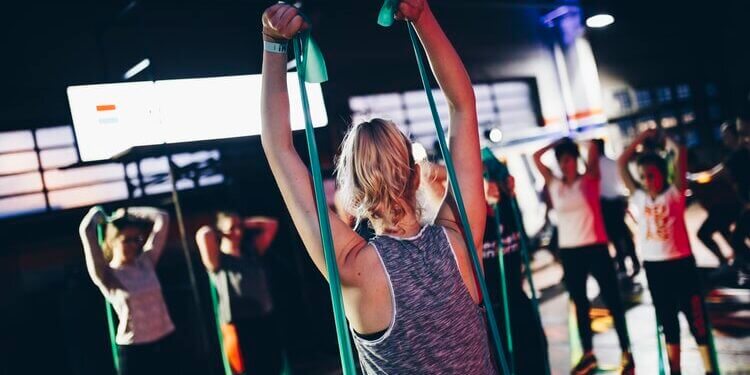
Tie a resistance band to a door handle at chest height. Stand with your back to the door with both hands on the band at your chest. Release tension on the band, and step away from the door. Push hands straight ahead, keeping arms fully extended for two seconds and then move back to chest. Do 10 repetitions and then turn and repeat the other way.
This is the most crucial anti-rotation core exercise around. It exercises your deep core to prevent those twisting forces that threaten your lower back with every move you make throughout the day, whether it be a reach, a twist, or whatever.

Exercise 6: Wall Sit with Knee Tracking (45 seconds)
Place your back against a wall and slide down (down the wall) until your thighs are parallel to the floor. Make sure that your knees are directly over your toes, not inwards. Sustain this position for 45 seconds, breathing normally.
The wall sit build is an isometric exercise that strengthens the quads and glutes without straining the joints. The knee tracking check, which involves keeping knees over toes through the entire movement pattern, teaches the movement pattern that helps to prevent the majority of knee pain among Sri Lankan gym-goers caused by a knee collapse.
Incorporating this into your week
This circuit can achieve results in 6 weeks with 2 sessions per week. Three sessions a week result in quicker improvement. The adaptations occur in recovery, not during the session; for most people, more than four sessions is no more beneficial.
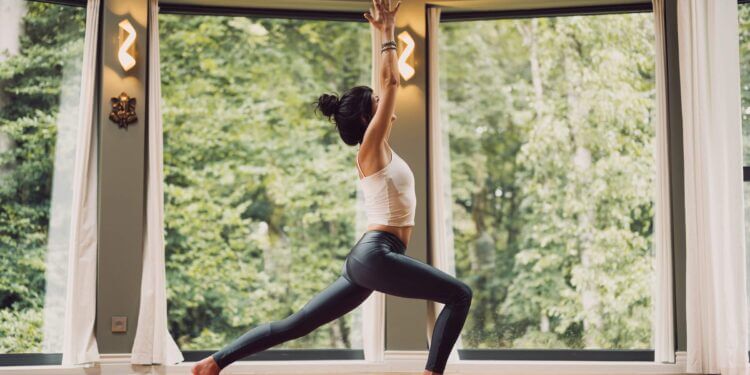
After every circuit session, perform 5 minutes of hip flexor stretches, which is a kneeling lunge position, 60 seconds on each side. This helps to directly reverse the hip flexor tightness that is the primary postural issue for desk workers in Sri Lanka.

The Bottom Line
Lower back pain and knee pain after 35 is not the norm. They are the inevitable by-product of poor functioning of deep core muscles working to support joints that they are not designed to support. Strengthen the joints and less pain. It is frequently totally absent.
That foundation is this circuit, consisting of six movements, no gym, no heavy weights, and lasting at most 25-35 minutes twice per week. Start it this week. Within a month, you will notice the difference in your knees and back.
Good joints aren’t made by luck. A trained joint: Provide it with support and it will ride you for the next 30 years.










Discussion about this post