


This post is also available in:
 English
 Tamil
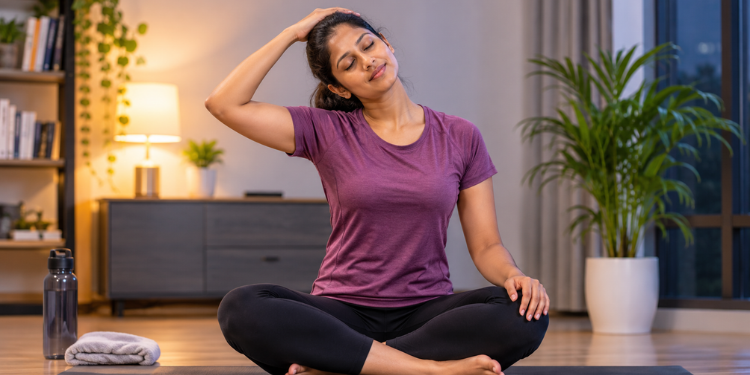
At the end of the day, when you’ve been working on a computer, your body can feel like a coiled spring. Your shoulders are rounded, your hips are stiff and your mind’s still busy. As bedtime comes, it takes me by storm.
You can help by having a quick night routine. Gentle movement combined with slow breathing can help to relieve tension and let your body know it’s time to lie down in repose. On this blog, we present a simple 10-minute workout you can perform at home without any equipment.
It is not known why our bodies get stiff
Sitting for hours allows your body to settle into that position. The back of the upper body rounds downward, the chest compresses and the front of the hips contracts. This may result in stiff joints, sore shoulders and an achy lower back over time.
Add to that stress. When we are under stress, we tense our neck and shoulders and our breathing is shallow. This maintains the body’s state of alertness, which is not a desirable state of being at night.
The Two Key Areas
This is designed for part of the body where it is common to get tight while working at a desk.
Thoracic spine. This is in the back, centered between a person’s shoulders. If it is stiff, your shoulders will round forward and your lower back and neck may be overstretched.
Hip flexors. They are the front hip muscles. Long sitting will shorten the satins and cause some strain to your lower back and posture.
Why Add Breathwork?
Slow breathing is calming for the nervous system. Slowly breathing out can change how the body responds from fight or flight to rest and digest. Your heart rate will become slower, and muscles may become soft.
Combining movement with relaxing slow breathing allows you to be more relaxed than stretching alone. Others claim to experience better sleep after using it as well, though this varies from person to person.
Before You Start
- Have loose,e comfortable clothes on.
- Place a mat or soft rug on the floor to use.
- Obscure the lighting and turn off your cell phone.
- Move slowly. A gentle but not sharp stretch should be felt.
The 10-Minute Routine
1.Breathing reset (1 minute)
Lie on your back with your knees bent. Place your hand on your belly. Inhale four counts, rising belly. Exhale through your mouth for 6 counts. Exhale as you relax; the longer the time. The more you will be able to relax the longer you can exhale.
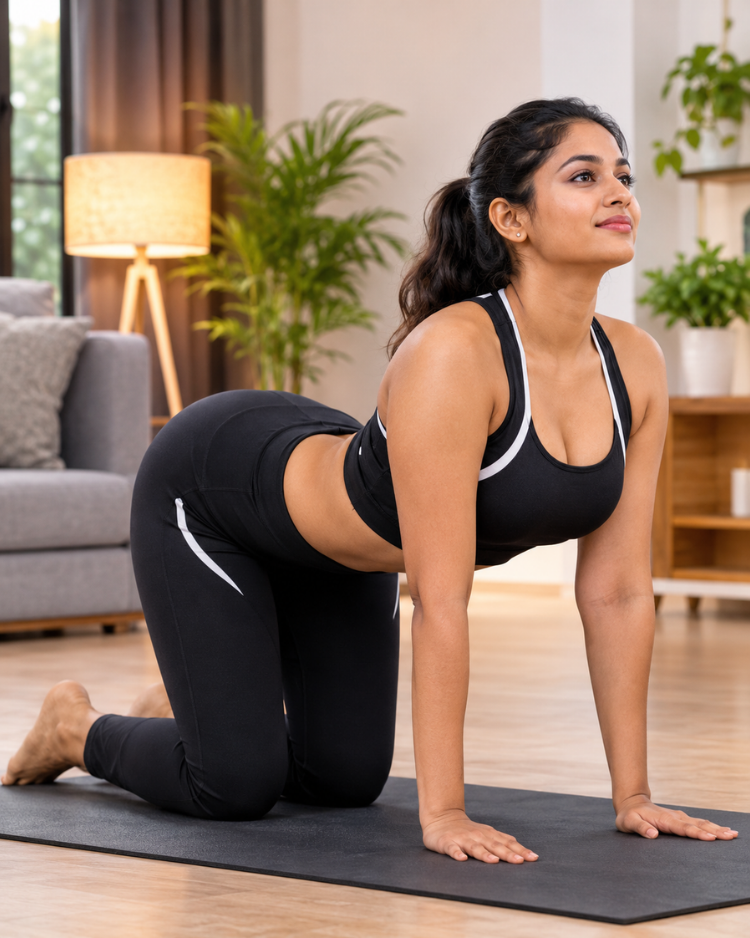
2.Cat-cow (1.5 minutes)
Get on all fours. While breathing in, raise the chest and slightly arch your back. On exhale, curve back towards the ceiling. Take care to move slowly using your breath.
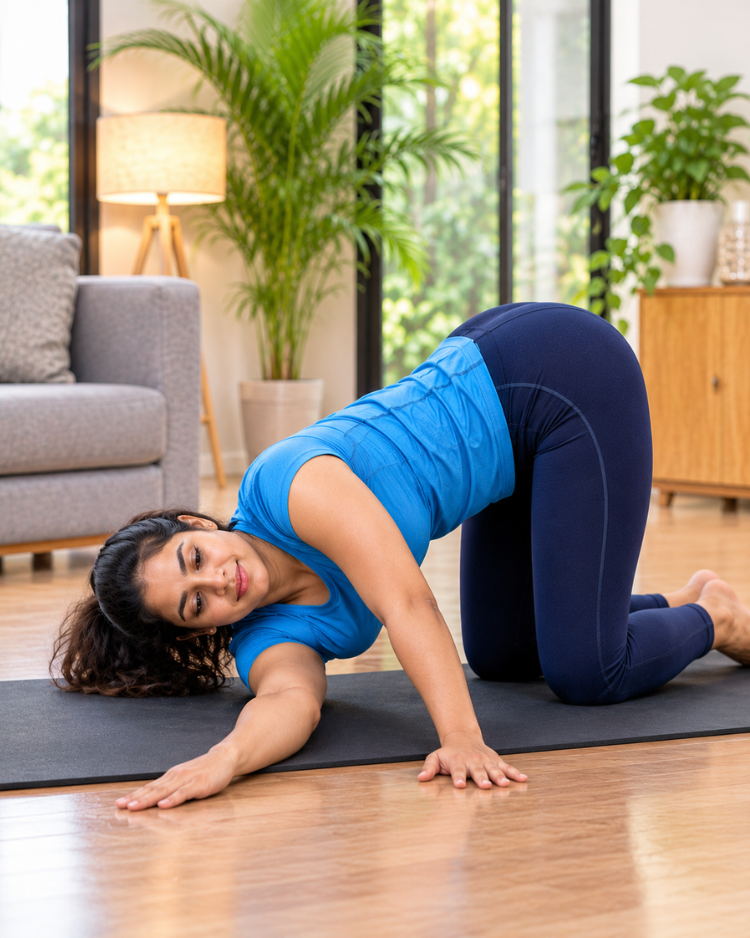
3.Fly a needle (2 min)
From hands and knees, pass the right arm under the left arm, shoulder and ear on the ground. Note the stretch in the upper back. Pause for 5 slow inhales and exhales; then repeat on the other side.
4.Open book (2 minutes)
With knees bent and the arms forward. Raise the top arm and spread fingers as though to take a book; face the top arm towards the ceiling. Pass your hand over your eye. Take 6 slow repetitions.
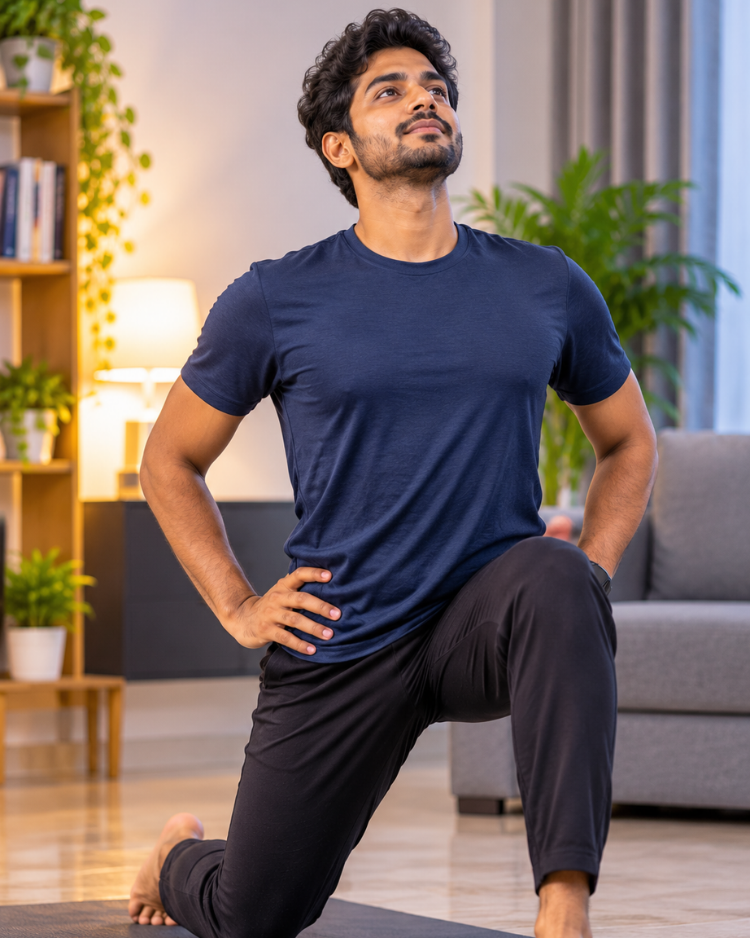
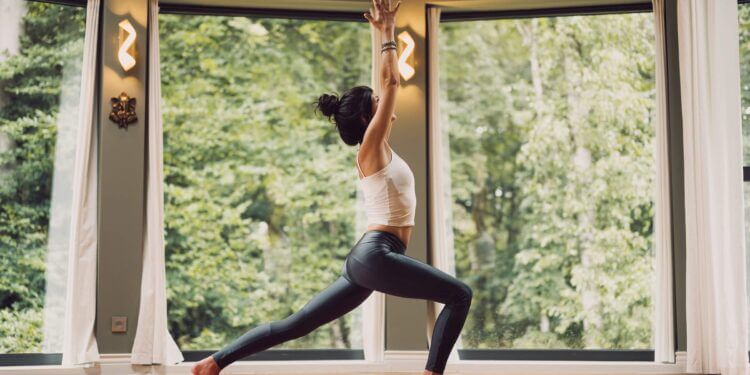
5.Low lunge hip flexor stretch (2 minutes)
Sit on your right knee, with your left foot out in front. Pull your tailbone under and a little forward, sensing a stretch in front of the right hip. Pause for 5 slow breaths, then repeat on the other side. If your knee becomes sore, get some padding under your knee by resting a folded towel underneath it.
6.Cow face with breathing (2.5 minutes)
Cross your legs, stretch your arms and press your forehead to the floor. Slowly breathe in to the back and sides. Allow the entire body to experience a feeling of weight.
To get the best results, use these tips:
- Repeat at the same time each night. If you have a regular routine, you need to make your brain know that sleep is coming soon!
- Keep it gentle. This is NOT a workout OR training. Don’t overextend a stretch.
- Take deep inhales through your nose. This, of course, will make breathing more difficult.
- Be patient. The majority find a sense of relief after just a week or two of consistent use.
Little Ways or Easy Habits for the Day
If you’re moving around during the day, the evening routine will be more effective. Move around often and for a length of time (30-60 minutes). Adjust the screen to eye level. Occasionally turn your shoulders back; keep your foot on the floor. A few simple circumstances that could actually decrease the amount of stress you bring to the night.
When to Be Careful
Stop all activity and movement resulting in sharp pain, numbness, or tingling. If you have persistent back pain and/or a history of spine injury or health condition, you should seek advice from your doctor or physiotherapist. Any pain that persists should always be explored.
Final Thoughts
There is no need to spend an hour and/or special equipment in order to feel better in your body. Slow breathing and moving gently for 10 minutes can relax and calm your mind and release tight spots. Repeat this exercise every night for a week. Pay attention to your posture, mood and sleep patterns.


















Discussion about this post