



This post is also available in:
 Tamil (தமிழ்)
  Sinhala (සිංහල)
It is so slow that there are men who don’t realize it’s there until they notice it. By the time you’re 25, your shirts will fit well. The same shirts give a bit of a tug at the belly by 32. After the age of 35, there is a noticeable roundness that didn’t exist previously. The belt is positioned differently. The mirror reflects back something you didn’t expect to see.
It is very common to have belly fat in Sri Lankan men older than 30 years. It is also extremely frustrating since many of these men are not eating that much more than they did in their 20s, and some are exercising regularly. But the belly remains. Sometimes it grows.
This is no secret. It’s very specific in its causes. Each has a real and practical solution.
Explain the significance of the experience of your 30s
Your body at age 30 is actually different than your body at age 22. There are a few biological changes that take place in early to mid-thirties that directly impact fat storage and fat loss.
Men experience a natural decline in testosterone from the age of about 30, at about 1-2% per year. One hormone that aids in determining where your body stores fat is testosterone. The more of these, the more evenly distributed fat will be. In times of low levels, the body stores fat around the belly. It’s a biological fact, not a personal defect.
Your metabolism also slows down. In part due to the declining level of testosterone, and in part due to an age-related phenomenon known as sarcopenia, the loss of muscle mass with aging, your body simply burns fewer calories when you’re at rest than it did ten years ago. When your diet hasn’t changed but your metabolism has, a calorie surplus will accrue without you realizing it, since you are not eating more than you used to.
These two reasons contribute to a large extent to the belly fat that comes on Sri Lankan men during their 30s. They are not the only story, though.

The Sri Lankan Risk Factors: Making It Worse
Chronic stress is one of the biggest contributors to abdominal fat accumulation and Sri Lankan men aged over 30 have some of the highest stress levels in the country!
The pressure from the post-economic crisis financial situation. Ruddy commutes from Colombo. The fear of losing their employment. The family responsibilities that increase and multiply during the 30’s. Screen time for sleep. All of these increase cortisol (the stress hormone) and higher cortisol, in particular, is a message for the body to store fat around the belly.
This is because so many men in Sri Lanka with a normal diet and even exercise are unable to lose their belly fat. They are disciplined in their fight against cortisol and cortisol is winning. Belly fat will have a strong biological need to remain until the root cause of the stress and sleep loss is resolved.
Another big factor is the typical Sri Lankan lunch. One or two curries (a small curry is equal to half a cup of rice) and a large plate of white rice (usually 2-3 cups) and then a sweet tea. This meal is high in carbohydrates, low in protein and has a large blood sugar rise and then a drop in the afternoon. Any extra calories from a lot of rice will build up over months and years and, in the case of an over-sized man whose testosterone is decreasing and cortisol is elevated, will be deposited in the abdomen.
Eight to 10 hours of sitting at a desk does everything. Sitting for long periods of time inhibits fat oxidation at the metabolic level and places the core muscles of the abdomen under stress. Men who exercise for one hour, but then sit for 10 hours, still suffer the metabolic effects of a largely sedentary day.
The most effective way of getting rid of it
The silver lining is that belly fat in men over 30 years of age can be easily reduced if they stick to a consistent and targeted approach. Unfortunately, there is no quick way. The problem with all of the various diet plans, extreme diets, and waist trimmers is that they don’t focus on the underlying hormonal and lifestyle causes of the fat gain.
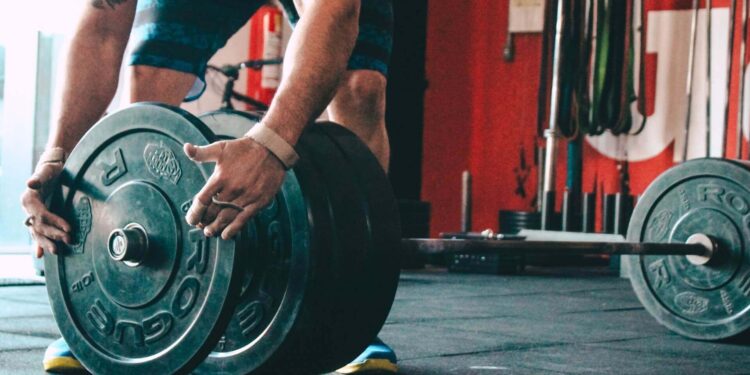
Eating enough carbohydrates and strength training is the most effective exercise program for losing belly fat in men over 30. 3 workouts per week naturally boost testosterone, increase muscle mass, which increases resting metabolism and decreases cortisol over time. You don’t have to go to extremes; a few sessions of 40-50 minutes a week with compound exercises such as squats, rows and presses should yield results within 8-12 weeks.
Walking for 20-30 minutes a day along with the strength training will help you lose fat faster than just by doing the strength training alone, and without the cortisol spike that can occur with high-intensity daily cardio. Walking is low enough in intensity to actually reduce cortisol as opposed to increasing it.
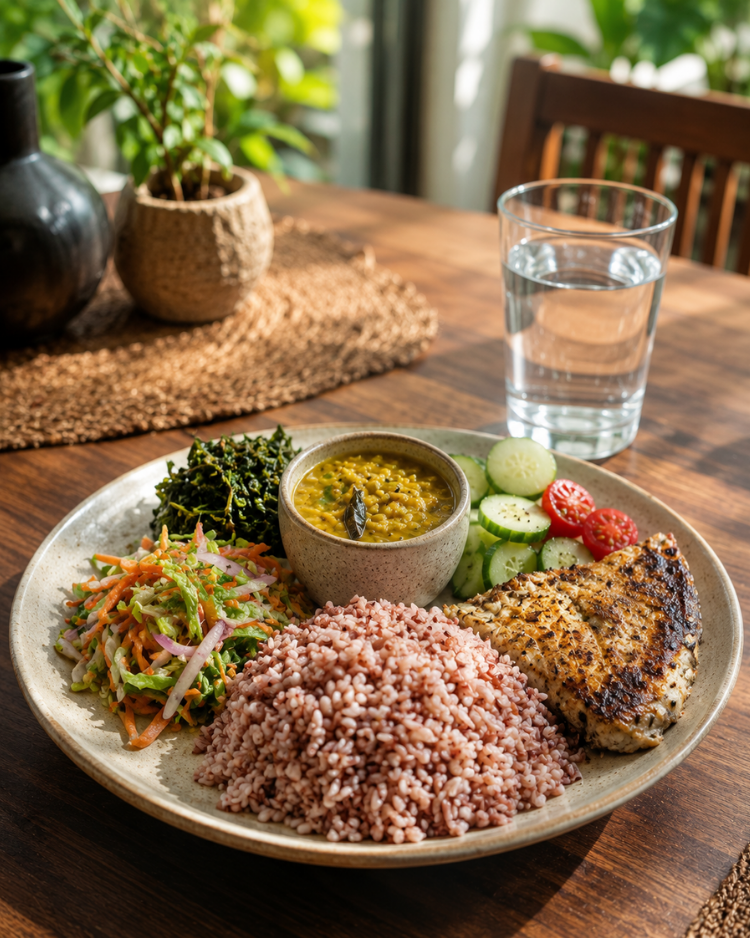
Eating two to three cups of rice with curry for lunch instead of one cup results in having more protein and fewer excess carbohydrates.Eating 2 to 3 cups of rice with curry instead of 1 cup and 2 curry (double the curry, particularly dhal and fish) helps to balance the meal towards protein and away from excess carbohydrate. Most men will notice a difference in their tummy after a consistent effort of this change over three months.
SLEEP is a MUST to be protected. Cortisol resets during deep sleep. If it’s not there, all other efforts are on a biological uphill climb. Men who want to shed belly fat are allowed to turn their screens off at 10:30 PM or get 7 to 8 hours of sleep; it’s part of the cure.
It’s time to face the facts about alcohol. Both beer and arrack are high in calories and each will take priority over burning fat when consumed. Over time, the body will show measurable changes to belly fat if you cut back on drinking to once a week or fewer.

How Long It Takes
By the end of the first 8-12 weeks, most Sri Lankan men older than 30 will see a visible reduction in belly fat after getting a good amount of strength training three times a week, walking every day, cutting back on rice, getting a good night’s rest and drinking less liquor.
The first 4 weeks are slow. Your body is changing: improved insulin sensitivity, a slight increase in your testosterone, and better control of cortisol levels, all of which are not visible in the mirror yet. Stay the course.
By the end of week 8, most men will feel the difference in their trousers around their waist. Other people can see the difference by week 12. It becomes noteworthy by the sixth month.
The Bottom Line
Fat is not a natural byproduct of being over 30 and won’t stay on at that age. It is the result of certain biological modifications, certain lifestyle patterns and both can be improved through persistent and directed effort.
Lift weights. Walk daily. Eat less rice and more protein. Sleep properly. Reduce alcohol. That is the plan. It’s easy, it’s free and it works.
“At 35, belly fat is not you. It’s your body’s way of saying something’s not right. Listen to it and then act upon it.”

















Discussion about this post