


This post is also available in:
 Tamil (தமிழ்)
 Sinhala (සිංහල)
For many of us, most of the day is spent sitting. Sit at a desk, sit in a car, sit on a sofa. At night, our hips feel tight, our upper back feels stiff and our shoulders are rounded forward. Then we wonder why sleep is so hard to come by and we can’t sleep well.
A brief nighttime routine can be beneficial. There are certain areas that are particularly prone to tension,s o in 10 minutes you can release tension, reset your posture, and tell your body that it’s time to rest.
So, what is the Kinetic Chain?
Your body is like a chain. Your feet, legs, hips, spine and shoulders communicate and move well. When one link is tight, other links tend to work hard to compensate.
The one that most people tend to be familiar with: Long sitting stretches the front of your hips. Stiff hips may pull into your lower back and impact the position of your upper back and shoulders. Eventually, you experience tension in areas that don’t seem related.

What Is Fascia?
Fascia is a delicate connective tissue that encases your muscles and organs. When staying in a posture for a prolonged period of time, the tissue can become restricted in its movement or tight.
Self-myofascial release is a tool, such as a foam roller or lacrosse ball, used to apply slow pressure to tight areas. It can be helpful to let tension and relaxation run wild. Its exact mechanism still needs to be determined by scientists. Maybe it’s because of the nervous system: soothing pressure and controlled breathing send your body a soothing message of “It is OK to relax now.
There are most certainly reasons to do this before bed
A calm nervous system is essential to good sleep. Your body remains in “alert” mode whenever you are stressed and tense. Slow and steady movements, combined with deep breathing, bring you into “rest and digest” mode.
It can also be a very clear signal to the mind that the day is over, as this is an evening routine. People sleep better if they do the same routine of relaxation activities nightly.
I can’t guarantee that this routine will solve all sleep issues. It is safe, inexpensive and many find it useful, and it helps a great deal with getting rid of the stiffness that sitting causes.

What You Need
- A foam roller
- A lacrosse ball or tennis ball (use a soft ball if you prefer).
- A mat or carpet
- Ten quiet minutes
The 10-Minute Routine
Move slowly. The feeling should be like a “good ache” and not sharp pain. Inhale deeply and slowly through the nose and exhale long, slow, gently.
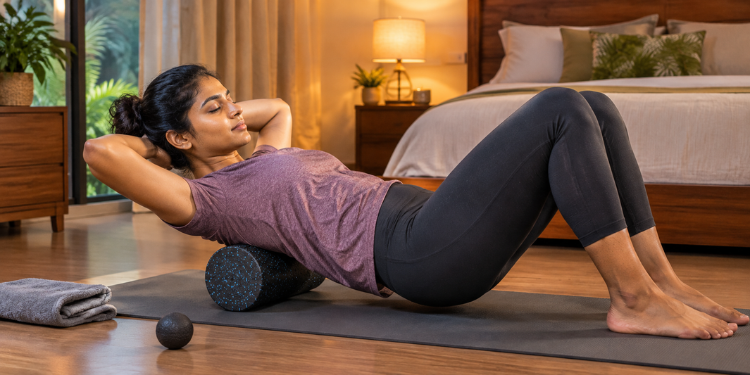
1.Upper back roll (2 mins)
Apply the foam roller to the upper back (under shoulder blades). Bring arms across chest and raise hips up slightly. Roll back and forth a few times. Pause when there are tight spots and breathe slowly three times. Do not roll on knees, lower back, or neck.
2.Chest opener (1 minute)
Lie lengthwise on the roller with knees bent. Relax arms with palms facing up, and spread them out to the side. Relax and breathe. This reverse action to rounded shoulders when working at the desk.
3.Hip flexor ball release (2 minutes per side is ideal)
Face down with the ball at the front of the hip, slightly below the hip bone. Gently put your weight on it. Breathe slowly. If there is a tender spot, move a little bit and then stop.
4.Glute release (2 minutes)
Sit on a ball with crossed ankles over the opposite knee. Slightly lean towards the crossed-leg side. Breathe in any way that is comfortable. Switch sides halfway.
5.Low lunge stretch (1 minute for each side)
In a lunge, kneel on the floor. Lift tailbone slightly and slowly move forward toward the front of the hip until there is a stretch at the front of the back hip. Breathe slowly and lower ribs.
6.Closing breath (1 minute)
Lie on your back with knees bent and hands over belly. Take a four-count inhale and a six-count exhale. Allow your body to feel weighty.
If you don’t have a lot of time, choose any three drills. It’s better to do something a few times a day than once a week, and a few times a night.

Safety Tips
- Do not roll joints or on the spine.
- Avoid injuries such as sharp, burning, or pinching pain. Unless you think good thoughts, get out of it!
- Never breathe out. One of these effects is slow breathing.
- Don’t roll over areas of injury, bruises and swelling.
- Ask your doctor or physiotherapist for a medical condition, or if numb or persistent pain before exercising.
Make It a Habit
- The optimum routine is the easy routine, repeated!
- If possible, at the same time of day – after dinner or before bedtime.
- Have your roller and ball in sight by your bed or sofa.
- Turn off and stow your cell phone! The brain has the ability to be stimulated by screens.
- Enjoy with herbal tea if you prefer.
What to Expect
If you don’t see miracles during night one, don’t be disheartened. Other people feel better immediately. However, others will notice that they are sleeping better or their stiffness in the morning is less in a week or two. Take note of the sensations you experience after waking up, from the first moment.
It is important to keep the following in mind: light, the day, caffeine, stress and sleep schedule can all influence sleep. This exercise is a useful factor but not the solution.
Final Thoughts
Hips, back and shoulders become tense, tight and painful throughout the day you’re sitting. Take just 10 minutes with a foam roller or lacrosse ball and you’ll eliminate that feeling and relax your nervous system to sleep more easily.

















Discussion about this post