


This post is also available in:
 English
  Tamil
Tamil
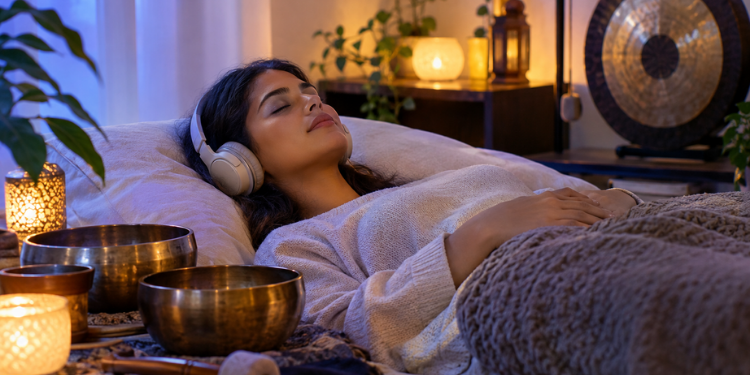
You lie in bed. Your body is tired. Your mind will not stop though. Work and work-related thoughts, messages and what you need to do tomorrow are whirling around in your head. Sound familiar?
There are numerous meditation applications out there that have helped numerous people to overcome this. They aid certain people but not others. A new form of wellness practice is rising to fame: sound therapy! It’s rapidly gaining popularity with busy professionals who want to break free from the never-ending noise and the never-ending thinking.
How is it that sound therapy works?
Sound therapy involves the use of certain sounds and tones to help relax your mind and body. It’s not new. Singing bowls, Tibetan drums, and drumming circles have been used for healing for thousands of years. Today, however, it is employed in a contemporary fashion, sometimes in combination with science and technology.
There are two common types of sound therapy: sound baths and binaural beats.
Sound Baths
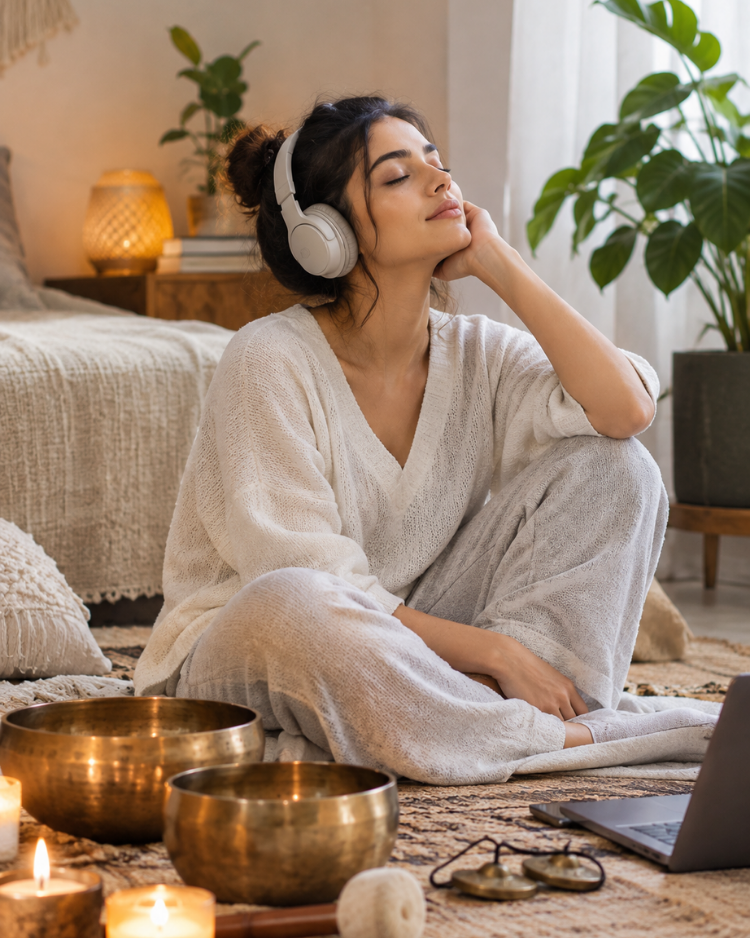
A sound bath is a session in which you recline and hear instruments such as singing bowls, gongs and chimes. You don’t take an actual bath. Instead, you are “bathed in sound waves. Slowness, depth, and steadiness are the characteristics of the tones.
A sound bath can bring a sense of relaxation to many people, a feeling that they are floating. Some fall asleep. Others report that their thoughts cease after a period of racing.
Binaural Beats
Binaural beats are a little different. The method is based on hearing two sounds, presented to the two ears separately through headphones. Your brain detects the difference between the two sounds and creates a third “phantom” sound.
This is believed to shift the brainwaves to a desired state, be it relaxation or concentration. This can be called “brainwave entertainment” because your brain starts to resonate with the sounds.
For example, a little piece of 4-8 Hz binaural beats is usually supposed to take you into that light dream stage, facilitating you to sleep. Other frequencies are for concentration or quiet alertness in the daytime.
What is the reason why sound healing has been gaining momentum as a way to heal illnesses?
These days, there is a lot of noise. No matter what, there is no break from notifications, emails, videos, or social media. Add to that the pressures of work and day-to-day life, and it’s no surprise you feel overwhelmed at the end of the day.
Thought apps grew in popularity due to the fact that they are guaranteed to convey calm in only a couple of minutes. Others, however, may find it frustrating not to be able to get rid of thoughts while sitting, particularly if they are beginners. This is a passive experience as opposed to sound therapy. It’s not necessary to be a particular type of thinker. It’s as simple as lying down, wearing headphones, or sitting in a room and letting the sound do the rest.
Having sound therapy as a part of the nighttime routine of busy professionals has its reasons for being popular. After a long day of screens and decision-making, many people just don’t want anything else to be right. They are looking for something that’s comfortable and relaxing.
How is it likely to be used in everyday life and how is it being used?
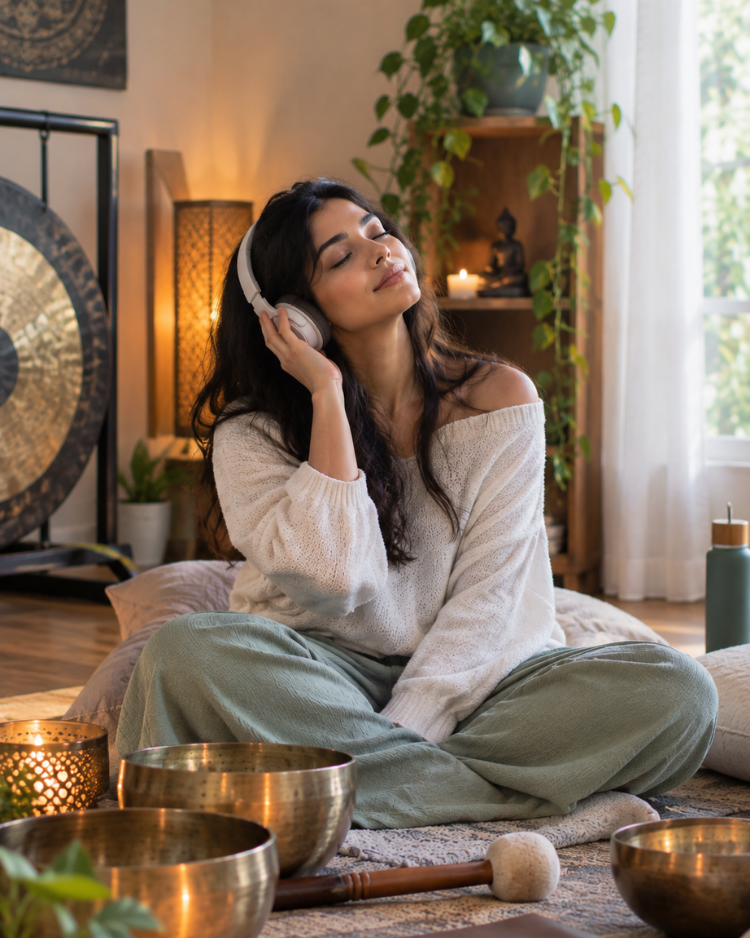
While in-person sound baths are gaining popularity in urban areas, sound therapy doesn’t need to be in a special studio visit. It’s now used by many people right at home as a ritual to unwind at the end of the day.
Common uses of sound therapy are:
- Listening to a sound bath before bedtime
- Wearing binaural beats via headphones for a brief break while working
- Using relaxing frequency music as background when journaling.
- Enhancing the effect by using a combination of sound therapy and breathing.
Sound therapy is accessible through apps, YouTube, or streaming platforms, and is easy to use; it matches a hectic lifestyle. No need for 30 minutes of silence! Just 10 minutes of the appropriate music can make a difference in your mindset.
What about the effectiveness?
A lot of people who use sound therapy claim that they do see a difference and particularly, how fast they fall asleep and how relaxed they are afterwards. Some say that it’s like hitting a “reset button” to a busy mind.
Everyone reacts differently, but the popularity of sound therapy is increasing, and many individuals are seeking to manage stress in a gentler manner, particularly at the end of the day. It has one thing that sometimes meditation apps lack – an experience that isn’t a chore.
Getting Started
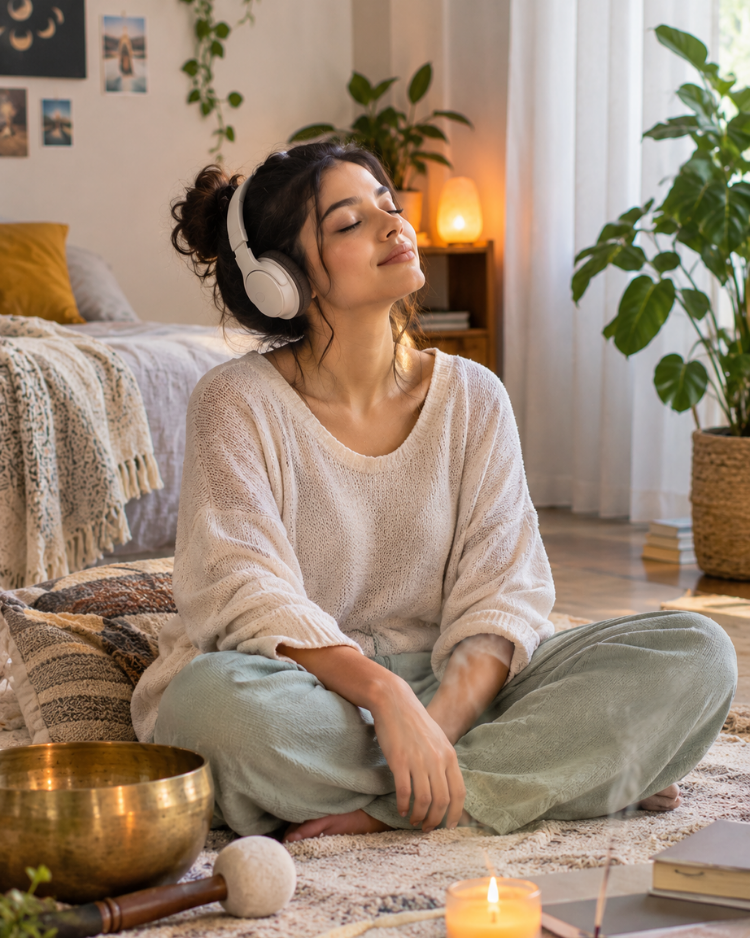
If you are interested in sound therapy, start simple:
- Pick a quiet time such as the evening.
- Headphones are required for binaural beats, as they require each ear to receive a different tone.
- Consider doing a short session of 10-15 minutes to begin with.
- Serve with low lighting or a relaxed seating position, such as lying down.
- Be patient. As with any new habit, your body and mind might require a few sessions to allow the body to become accustomed to the new habit.
A New Kind of Quiet
So much of our lives are spent in the presence of noise, and in most cases this is from our screens and stress. With sound therapy, the sound isn’t meant to excite you, but rather to help calm you. It could be the soothing vibrations of a deep voice singing a bowl, or the gentle ebb and flow of binaural beats, but this meditation can finally be a way to cool that racing mind.
If meditation apps don’t work for you, try out sound therapy. Sometimes the key to calming the mind is not about doing more, doing harder. It’s in the correct kind of sound.



















Discussion about this post