


This post is also available in:
 English
 Tamil
For many Sri Lankan households, the first meal of the day is breakfast the day before. Cooked rice is placed in a bowl and covered with water to simmer. In the morning, it turns into diya bath, a cool, soft, and slightly tangy dish, which our grandparents ate before going out to the fields.
People worldwide today buy fermented foods such as kefir and kimchi for a healthy price. But we’ve got one at home already. Let’s take a look at why the diya bath should be revitalised.
What Is Diya Bath?
Diya bath translates to “water rice”. You boil the red rice, cool it down and top it with fresh water. After that, you set it aside for 8-12 hours.
The best choice is red rice. It keeps its outer layer, called the bran, so it has more fiber, minerals and B vitamins than polished white rice.
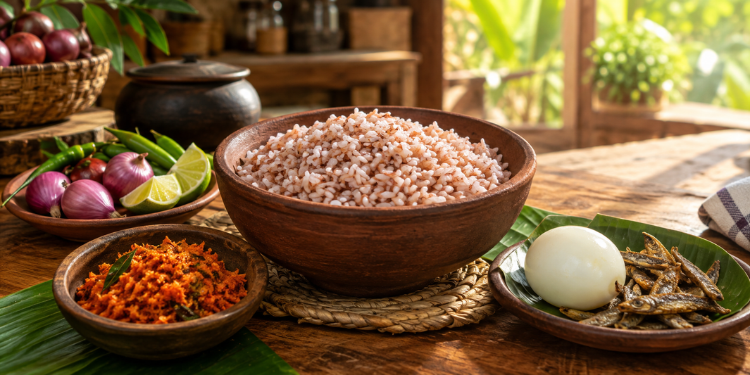
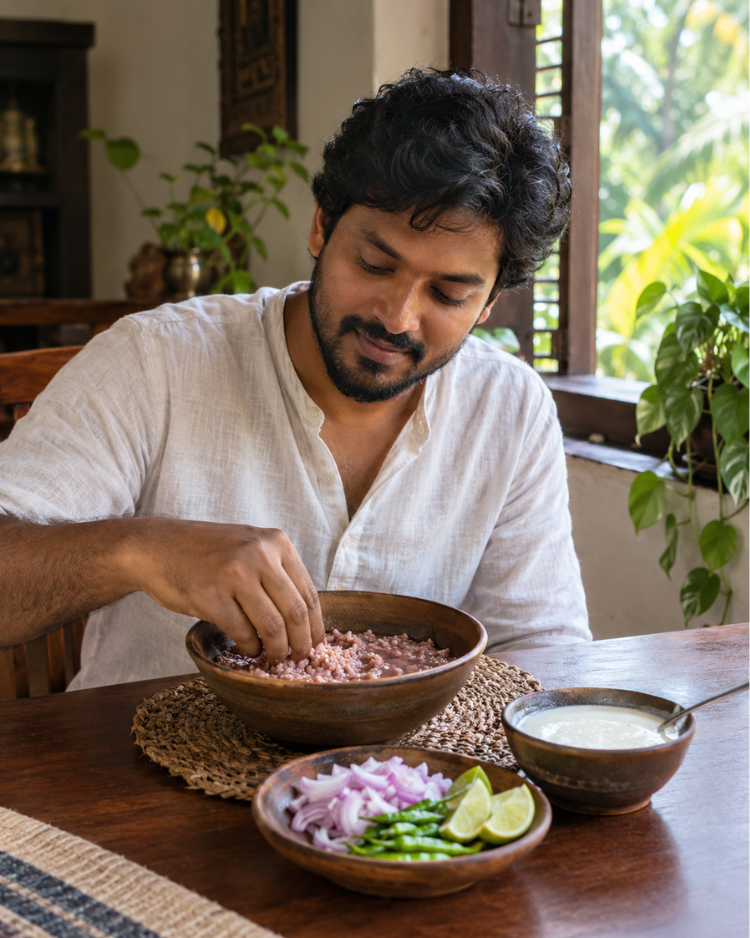
Most families consume it with small onions, green chilli and salt and a side dish such as dried fish or pol sambol.
What Happens Overnight?
The naturally occurring microbes in the air, water and rice start to grow while the rice is in water. They consume starch and convert some of it to mild acids. This is fermentation. The principle is the same as that of curd and sourdough bread.
Here are some of the things it can do:
- Adds friendly microbes. Lactic acid bacteria are present in fermented rice (but the quantity depends on the home).
- Creates resistant starch. Resistant starch is formed during the cooling of cooked rice. It is slowly digested by your body and is a food source for the good bacteria in your gut.
- Softens the grain. The rice is a bit fermented, which is why it’s easier to digest.
- May increase some nutrients. Similar fermented rice from South India has been found to contain greater amounts of some minerals and B vitamins.

A Friend to Your Gut
There are a lot of little bacteria living in your gut. They aid the process of digestion and boost immunity. They’re fond of fibre & resistant starch and diya bath provides both.
The rice is soft and watery, which makes it nice and easy to eat in the morning, as it does not irritate the stomach. If you want to add extra benefits, you can have it with a spoonful of curd. This enriches the bowl with more good bacteria.
Diya bath is NOT a medicine. Helps maintain a healthy gut, but is best used in conjunction with vegetables, fruit and abundant water throughout the day.
Chilling in a natural way to cool them down
A cold meal is very refreshing in the warm climate of Sri Lanka. Diya bath is taken at room temperature and it’s mixed with a lot of water, so you stay hydrated.
In the past, it was believed to help cool the body, particularly during hot months. The practice of “body cooling” has not yet been tested in science. However, the water and salt can help replenish the fluid and sodium we lose via sweat, and for that alone, it’s a great meal for a hot day.
Why hasn’t the energy sector been a consistent segment of the economy?
Red rice has a lower glycemic index than white rice. This helps to slow down the rise of sugar in your blood. Resistant Starch does even better for this.
This means that blood sugar and energy levels rise more slowly, rather than sharply, and then stay elevated all morning. You are less likely to experience hunger and sleepiness at 10 am.
It’s also lower in calories. A bowl is a combination of water and rice, so it fills you up without weighing you down. Enhance with protein, e.g., an egg, gram,m or dried fish, to make it a complete meal.
If you’re a diabetic, consult your physician and monitor your portions. Rice is still a carbohydrate.

Why Are We Forgetting It?
Fast breakfasts have taken over. Most of the young people have never tasted diya bath because it is available to them in the form of packed cereal and bread and sugary drinks. Some consider it to be “poor people’s food.”
But look closer. It’s simple and inexpensive to make, doesn’t require any preparation in the morning and is made from real ingredients. Once we know why we love many traditional foods. Diya bath is one of them.
How to Make It at Home
- Cook red rice until soft, 1 cup at a time.
- Allow to cool to room temperature.
- Place in a clean, clay or glass bowl.
- Fill with 1.5 cups to 2 cups of clean water boiled and cooled.
- Sprinkle it with salt and cover.
- Allow to sit for 8-12 hours.
- Stir in the morning and add onion, green chilli, a squeeze of lime, or a spoon of curd.
- This is a normal occurrence and has a mild sour smell. This is the fermentation in action.
Easy Ways to Enjoy It
- Mix with pol sambol and a boiled egg.
- One teaspoon of curd and a pinch of cumin.
- Extremely easy and inexpensive to prepare and tasty with fried dried fish and fresh onion.
- Fresh cucumber, with a little lime.
- Use a small bowl initially to get your stomach accustomed to the size.
Stay Safe
Cooked rice can become contaminated with bacteria if stored too long in a warm place. These are a few tips to keep in mind:
- Always use fresh cooked rice.
- Do not leave for more than 12 hours.
- If it smells bad or is slimy, throw it out.
- Use a shorter time or place the bowl in the coolest location in very hot weather.
Use only if medical advice is obtained first by pregnant women, young children, older persons and patients with certain medical conditions, such as weakened immune systems.
Final Thoughts
Diya bath is good for health without a packet or supplement. Sometimes, it’s a clay pot and a bit of patience.
It is inexpensive, cooling, and good for your stomach. Try it for a week and see how your mornings will be.
















Discussion about this post