


This post is also available in:
 English
  Tamil
Tamil
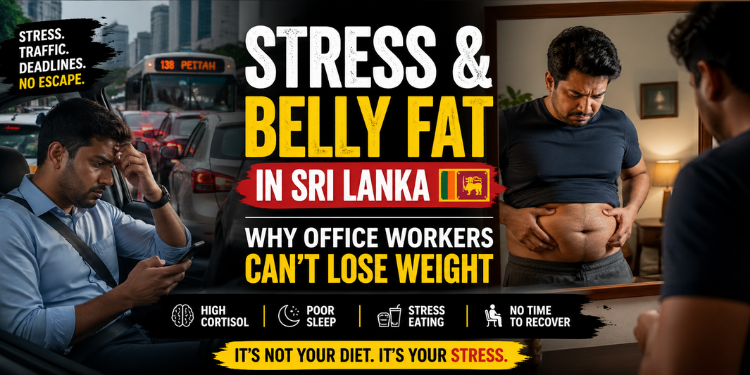
You are doing the right things. You attend the gym thrice a week. At dinner, you cut rice. You have quit soft drinks. You will walk during lunch break. Yet there is still the belly fat. It could even be deteriorating.
When this rings a bell, then it is not likely that your problem is your diet. Neither is it your exercise. It is a hormone named cortisol. And your everyday life in Sri Lanka is coming forth with more of it than your own body knows how to deal with.
So What Is Cortisol and Why Does It Matter when it comes to Belly Fat?
The main stress hormone in your body is cortisol. Your adrenal glands produce it and secrete it every time your brain perceives danger, pressure, or threat. Cortisol is helpful in small doses. It provides you with strength in times of need. It brings into focus. It helps you to get through a tough time.
What occurs when cortisol remains high for days, weeks, and months is the problem.
This makes your body store fat, but in the abdominal area, because of chronically high cortisol. It is a very old survival technique. Your brain believes that you are in chronic danger, thus deposits energy resources near your vital organs, so that they can be readily available. In the contemporary world, it is not a lion that threatens. It is a traffic jam, a tough boss, a bill that is not paid, or a WhatsApp notification at 11 PM, but your body is the same as ever.
Huge amounts of cortisol destroy muscle mass to use as energy, slow down your metabolism, make you eat more sugar and carbs, and make you sleep less. All these effects are a direct contravention of your fitness objectives.
Why the Sri Lankan Office Workers are particularly vulnerable?
The typical Colombo office worker is functioning in low-level stress in a near-permanent condition. And the majority of them are not even aware that this is ruining their body composition.
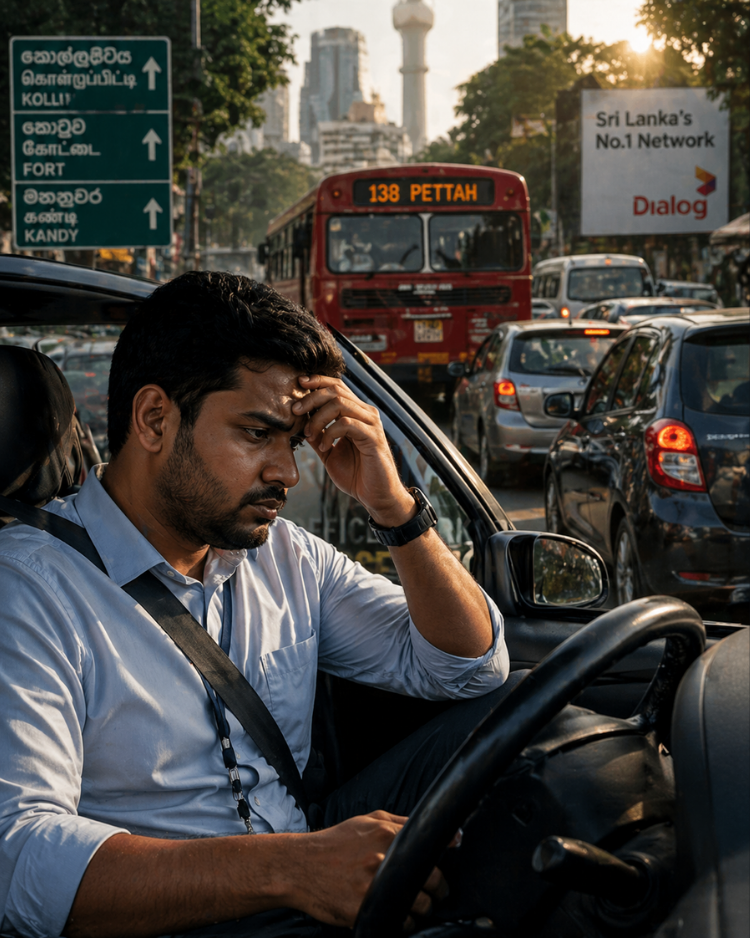
Begin with the commute. The distance between Nugegoda and Fort (or Malabe and Kollupitiya) takes 45 minutes to two hours. Traffic sitting is not inactive. Research indicates that commuting has a great effect on increasing cortisol levels, and a two-hour commute in stop-and-go traffic is one of the most consistently effective day-to-day stressors that an individual can experience.
Then, there is the financial strain. In 2022, Sri Lanka experienced one of the worst economic crises. Although the situation is stabilised, millions of families continue to bear the burden of increasing prices, mortgage payments, and employment insecurity. This form of persistent financial anxiety maintains high cortisol levels throughout the day.
Patterns of meals exacerbate it. Sri Lankan office workers do not have time to eat breakfast as they are in a hurry to get to the bus or avoid traffic jams. At 1 PM, they have a heavy lunch of rice and curry. They miss dinner or eat later. Going without meals leads to blood sugar crashing – a spike in cortisol. Late eating interferes with sleep, keeping cortisol up at night.
Next is the late-night screen time, the work messages received after 9 PM, the news cycle, and the cricket game, which goes on till midnight. All these keep your nervous system on the go when it is supposed to rest and rejuvenate.
The outcome is a body that does not completely get out of stress mode. And a body in a permanent stress mode is storing fat as well as you eat or as much as you train.
The reason why Exercise is not Sufficient
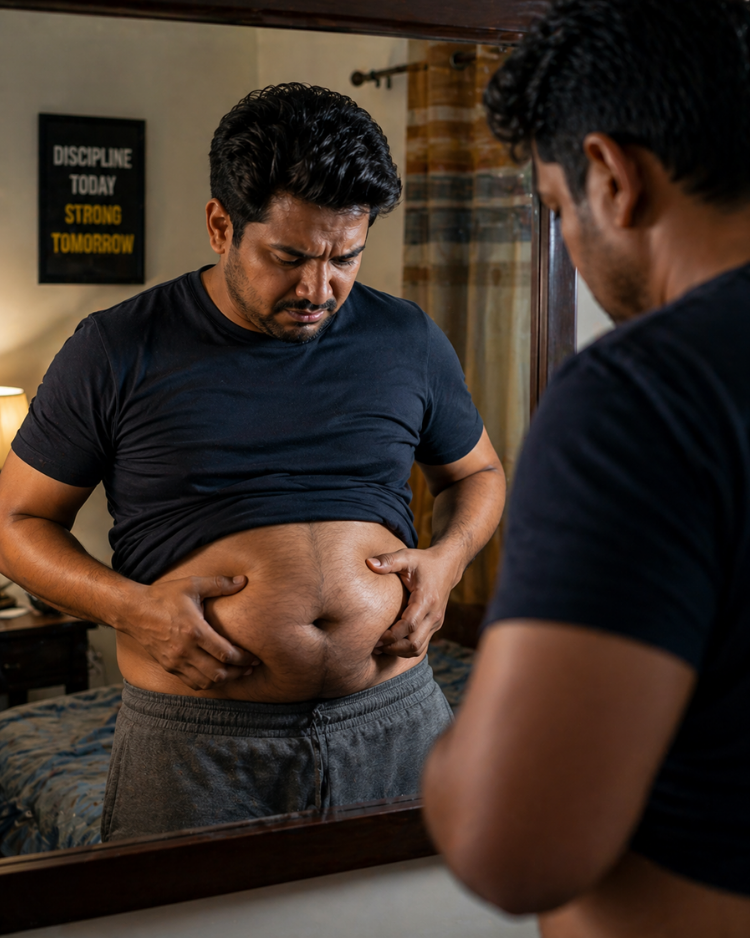
This is where most people are surprised. Workout is a stress in itself. Strenuous exercise increases cortisol in the short run. This is entirely normal and, in fact, beneficial – the cortisol burst following a workout makes your body adapt and become stronger.
However, when your already high baseline cortisol is augmented by intense exercise, things will be worse in the short term due to work, commuting and financial pressure. Cortisol is already flowing in your body. There is another rigorous exercise that lifts it. Recovery becomes slower. Fat storage continues.
It is the reason why an individual who begins training extremely does, in fact, gain weight at first, or they discover that their belly fat is not decreasing after months of training. They are contributing to exercise stress to an already overstretched stress system.
The answer is not to quit exercising. It is to work on the cortisol issue directly in conjunction with your training.
What Decreases Cortisol in a Sri Lankan Situation?
You are not always able to alter your work or your trip. However, with a couple of regular exercises, you can alter your body to react to stress.
One of the strongest cortisol-lowering instruments is walking at least 20 to 30 minutes a day, not strenuous cardio activity, just walking. When you are walking slowly around your neighbourhood or a park, it is more effective in reducing cortisol than sitting on the sofa.
Practices of breathing are effective. Deep, slow breathing for 10 breaths will turn on your parasympathetic nervous system – the antidote to your stress response. Do this either on your way to work or at bedtime. It is free and it only lasts two minutes.
Sleep is something that must be defended. During deep sleep, cortisol resets. Lack of sleep leaves cortisol high the following day, resulting in making you hungry, accumulating more fat and the process repeats itself.
Eat regularly. Do not miss breakfast. Have a boiled egg or a handful of roasted gram in case you are in a hurry in the morning. Normal blood sugar maintains normal cortisol.

The Bottom Line
Sri Lankan office employees seldom have an issue with their willpower when it comes to belly fat. It is a cortisol issue that is caused by commutes, money troubles, lack of sleep and unbalanced food consumption.
Fix the stress. Fix the sleep. Eat regularly. Then leave your workouts to do what they are made to do.
Abdominal fat is not a diet failure. It is your body that is telling you that it has been overrunning stress long enough. Rest, and it will at last release.























Discussion about this post