


This post is also available in:
 English
  Tamil
Tamil
You would like to have a balanced diet. You really do. Even when you set out each day at 7 AM (which is optimally early to get the early bird discounts at the buffet) and arrive back at the office after an hour and a half in the Colombo traffic, it sounds easier said than done than prepping that healthy lunch, something people with more free time, more energy, and fewer problems seem to do with ease.
Therefore, you come to walk to the office canteen or lunch boutique at 1 PM. You check out the list of available options. You guess as if you could make the best guess. By 3 PM, you are tired, overflown, and in need of something sweet.
This does not in any way affect the will. This is a problem of knowledge. That’s where this guide comes in handy.
This paper presents the impact of canteen food on fatigue and weight gain
Sri Lankan Office canteen foods are not formulated for nutrition. It is made to taste, speed and low cost. This translates to a diet composed mostly of refined carbohydrates, high in excess oil, low in protein and virtually free from fibre.
A typical canteen lunch is made up of a large plate of white rice, two or three curries that are oily in content and a fried chicken or fish with approximately 900 to 1300 calories. This exceeds daily calorie requirements for most people who work in office jobs over half in one meal. Most of those calories are from refined carbohydrates, cooking oil, and not protein and vegetables.
This meal causes a rapid increase in blood sugar. Your body acts on it by secreting a ton of insulin. After a drop in blood sugar, it then plunges. By 3 PM, it feels like you are heavy, tired and lack the mental energy to focus. It can be called the “lunch coma” by most people working in the offices. Most people working in offices in Sri Lanka call this the “lunch coma”. It is true, it is a result of what and how much you ate at 1 PM.
The great news is that you will be able to eat from the same canteen, at the same counter, but with a packed lunch, instead of having to bring lunch from home, and afterwards feel completely different! It only takes some knowledge of what you should buy and what you should forego.

This article is a version of the Simple Rules for Eating Smart at a Sri Lankan Canteen
Rule 1: Don’t control your curries, control your rice
With an average Sri Lankan lunch, the number one calorie provider is rice. The nutritious aspects of the meal are the curries: dhal, vegetables, fish, and chicken. The opposite is more common at the canteen: Undervalue a lot of rice, and complement it with small amounts of curry.
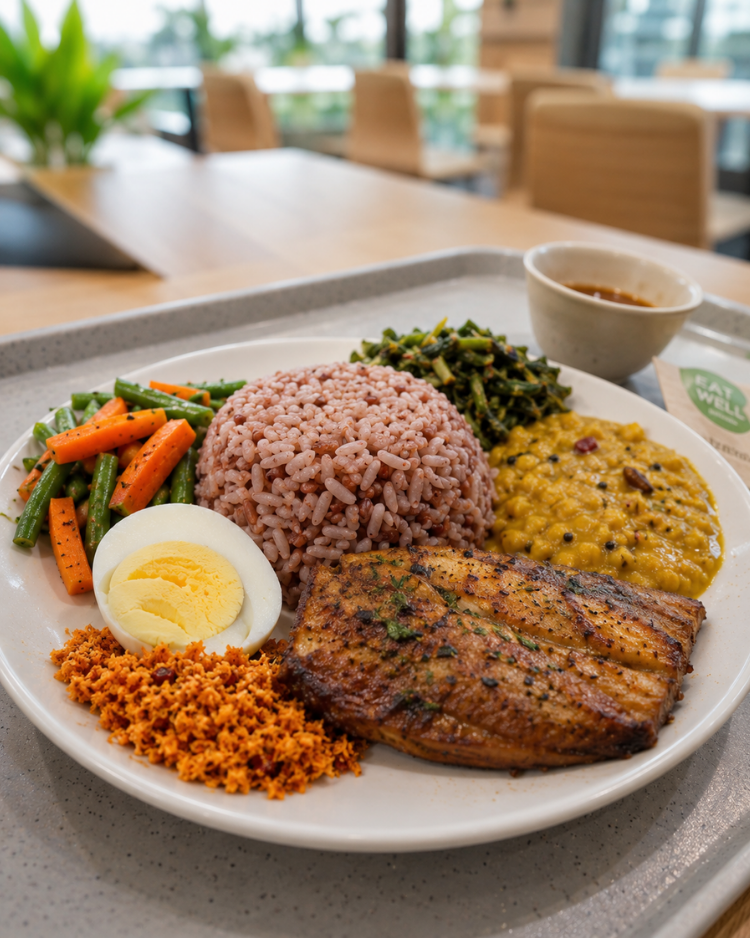
Flip this approach. Use one cup of rice (the size of a cup of rice) and then fill up the leftovers of your plate with curry and vegetables. You’ll receive much more protein, fibre and nutrients in a much lower amount of overall calories. When red rice is an option, always opt for red instead of white rice. Red rice is higher in fibre and has a lower glycaemic index, which means that it raises blood sugar levels less rapidly and keeps your appetite on hold for longer.
Rule 2: Always take dhal
In the Sri Lankan canteen, Parippu is one of the healthiest items. It has a high protein content, high fibre and low fat content. Eating dhal is an excellent way to add protein to a meal without adding a significant number of calories, especially when it’s compared to fried food. Remember, if you’re switching out of dhal, don’t skip a dhal to desire a fried item. Perform it in the opposite direction.
Rule 3: Selection of grilled or boiled food vs fried
If it’s between fried fish and grilled fish, always select grilled. If an option is given between a fried egg and a boiled egg, opt for the boiled egg. The protein content of these foods isn’t destroyed by frying, but the oil that’s added in the process is definitely not required and is going to add unnecessary calories.
However, if the only available fish is fried, consider eating it. The protein is still valuable. Just remember, it contains an increased amount of oil and make sure to use that oil in other parts of your meal.
Rule 4: Drink responsibly
This is where most people in Sri Lanka unknowingly get a lot of “excess” calories in their diet. About 30-40 calories per 1 cup of sweet tea with 2 teaspoons of sugar. People typically consume 3-5 cups throughout a day of work. Tea alone provides an additional 150-200 calories per day or more than 1,000 calories per week.
An office worker should make one of the biggest dietary changes that they can, and that is to switch to plain tea instead of the ones with sugar. If the taste change is too dramatic, start with ½ teaspoon and slowly decrease from that amount. Within 2 to 4 weeks, fully sweetened tea will begin to taste “uncomfortably” sweet.
Don’t have fizzy drinks for lunch. This equals almost 9 teaspoons of sugar in a bottle of Coke or Sprite (330ml). Has higher GL than rice, with no nutritional benefit. Always use plain water or plain tea to replace it.
Rule 5: Slow down!
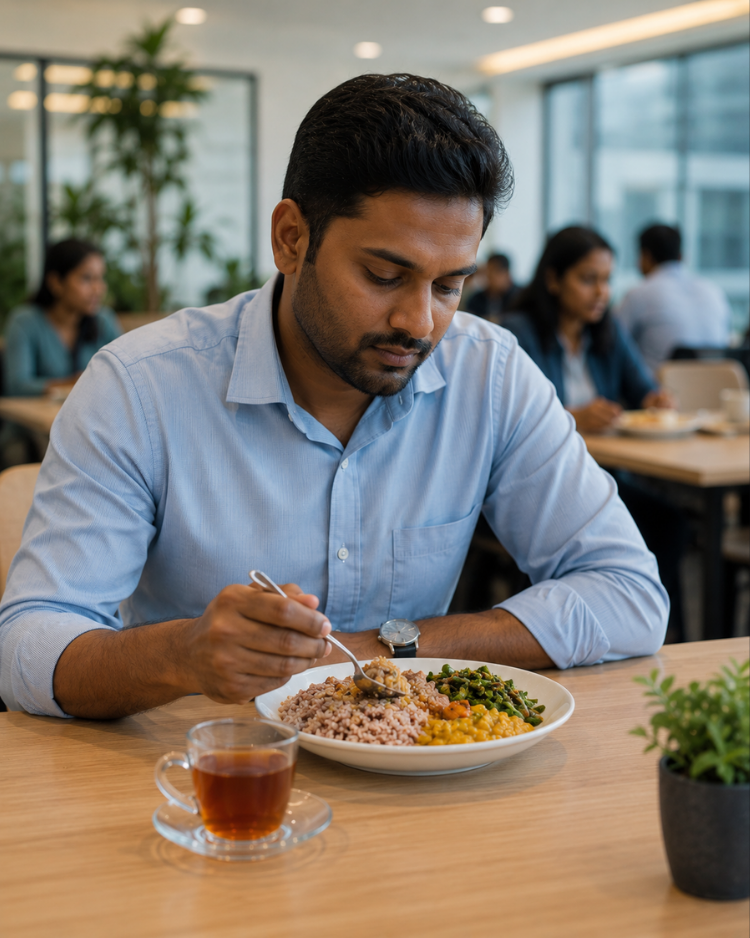
It takes a long time to determine you’re full, about 20 minutes, so allow your brain its time. It’s a typical lunch at a restaurant in Sri Lanka, lasting 8-10 minutes, whilst someone is texting on a phone! When your brain gets up to speed, you’ve already consumed more than you should have.
Keep the phone away during lunchtime. Eat slowly. Chew properly. You’ll be genuinely satisfied with a smaller portion and stay away from the subsequent afternoon tumble.
The Bottom Line
There will be no need to bring coloured containers for meal preparation at work. Don’t need to avoid eating rice and salads. All you’ll need to do is make a bit more calculated decisions at the same counter you go to every day.
Less rice. More dhal. Avoid fried, if there is a better (non-fried) option. Drink plain tea. Eat slowly. If practised regularly, these five habits will alter your outlook each afternoon and your body over the course of months.
There are no rules to follow that will lead an individual to healthy eating in a Sri Lankan canteen. It’s a matter of making a better choice every day until better choices become a habit.

















Discussion about this post