
This post is also available in:
 English
  Tamil
Tamil
You don’t need a home filled with rooms to exercise. You also don’t need an expensive gym or a room full of exercise equipment.
Many Sri Lankans, especially those in urban areas, live in apartments or work from home. Exercise is further complicated due to the busy nature of most jobs. If you live in an apartment, going to a gym at a convenient time can be very challenging.
This is where mat Pilates can be very useful.
Mat Pilates consists of movements that focus on control, balance, and breathing performed while using your own body weight. Most mat Pilates exercises do not require special equipment, making it very portable.
Pilates also helps develop good posture. A 2024 systematic review analyzed 13 studies that included 783 participants and reported that posture improved, but because the studies were of low quality, further research is needed.
For the Sri Lankan adult who sits all day at a desk, mat Pilates is a low-impact movement option.
Mat Pilates is a growing Urban Sri Lankan exercise fad
Mat Pilates is Low Impact Training for Tiny Home Spaces.
The most significant benefit of mat Pilates is its simplicity.
You should have sufficient room to safely lie down and move your arms and legs. You don’t have to use a treadmill, weights, or big equipment.
It is helpful for the occupants of smaller apartments in Colombo.
It can also be less noisy than some of the more vigorous exercises. No need to jump up and down or make loud movements repeatedly.
Just 20 minutes of exercise before work, after work, or during a free time of the evening is enough to develop a regular exercise habit.
This is not about the difficulty of the workouts; it’s about doing them once a month. Regular movement.
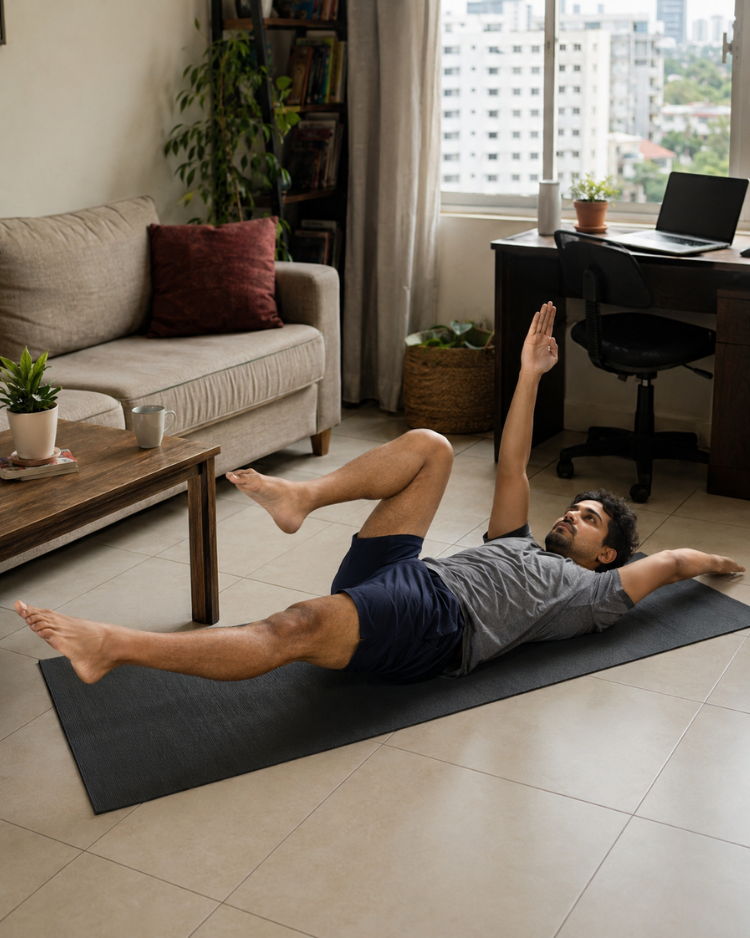
Combating the “Desk-Worker Posture”: Spine & Hip Realignment
People in the office work for hours at a computer.
Sitting for long durations of time can cause the spine and hips to feel stiff over time. Individuals can also become used to holding their shoulders rounded or looking forward at a screen.
Pilates focuses on body position and controlled movement. This can help people to be more conscious of their body posture and standing and moving positions.
A systematic review revealed that there are indications that Pilates has a beneficial impact on body posture and spinal alignment.
It is not a medicine to cure back or joint ailments, but it can become a part of a healthy movement routine.
Foundational Mat Pilates Exercises to Master First
The Pilates Hundred: Core Endurance & Breath Control
One of the popular Pilates exercises is the Hundred.
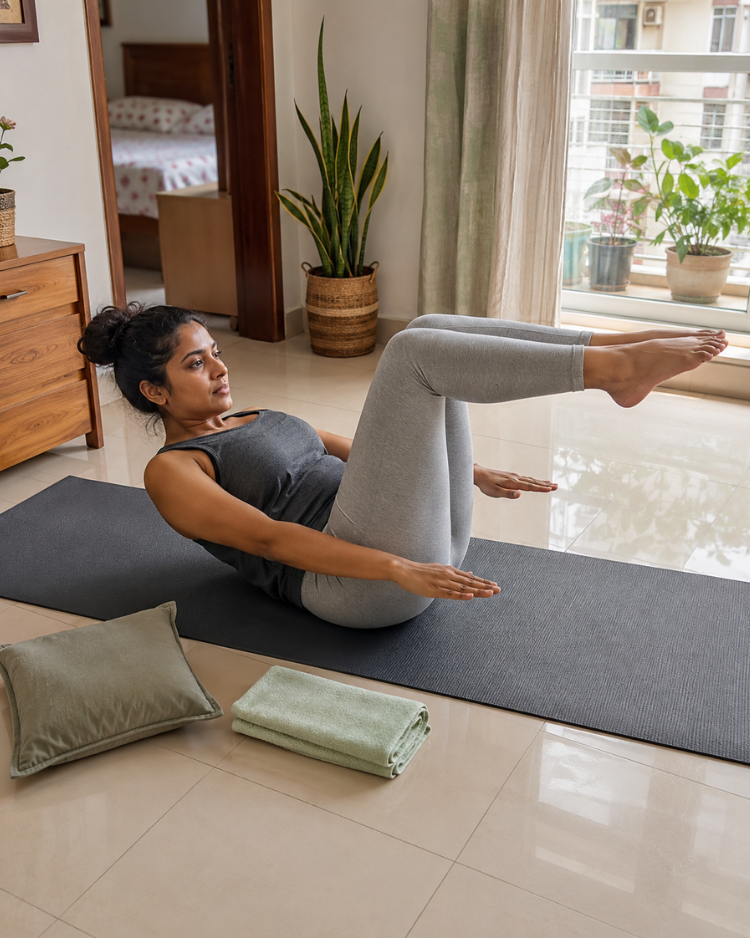
This includes lying on your back, raising your legs or keeping them bent, and performing slow, controlled arm movements, while concentrating on your breathing.
If you are a beginner, you don’t have to do the complete version right away.
Do not straighten the knees but minimize the motion if possible. The focus is not on the quantity of reps performed but on controlled breathing and good technique.
The Roll-Up & Single-Leg Stretch: Deep Abdominal Engagement
The Roll-Up is a slow progression from lying to a seated position and then back to a lying position, but under control.
Can be difficult, so if you are beginning, try a smaller movement.
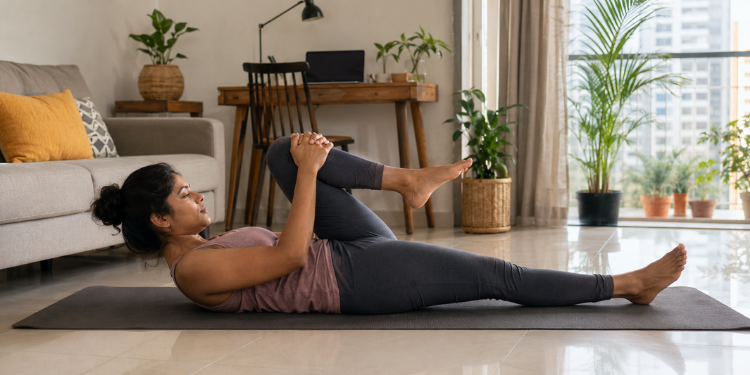
Single-Leg Stretch: Bring one knee to chest, and extend other leg. It involves guided motion and core stability.
Exercise only until it is pain-free or until it stops hurting.
Swimming & Pilates Plank: Posterior Chain & Back Support
Swimming is an exercise in which you lie on your stomach and move your arms and legs in a controlled manner.
The Pilates plank is a plank workout that is essentially the same as other plank workouts, except it will require focus on proper body alignment and breathing.
These exercises activate multiple muscle groups and are suitable for beginners.
If the full plank is too challenging, go with a modified plank on the knees.
Essential At-Home Setup
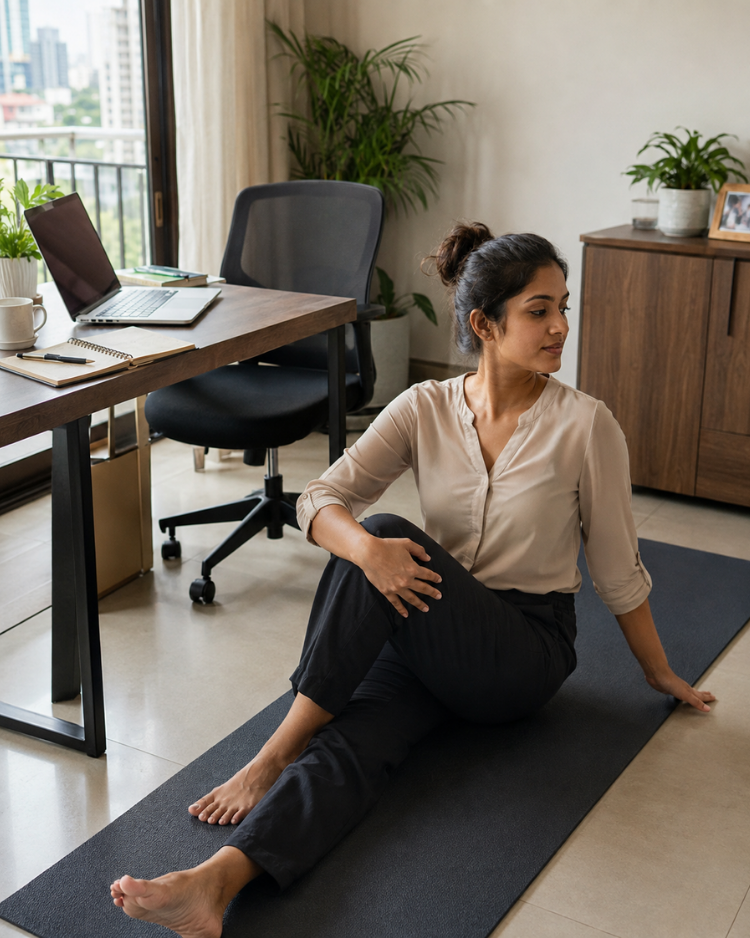
Choosing the Right Mat Thickness for Tile and Hardwood Floors
Generally, you can use a simple exercise mat.
Some of the floor exercises will be more comfortable for the Sri Lankan house with tile or hard floor by adding some cushioning.
A mat that is too thin could be uncomfortable around the knees, hips, or spine. A very soft mat also can make balance exercises difficult.
Select something that provides the support you need but will allow a certain amount of movement.
Simple Household Substitutes
It’s not necessary to purchase all the Pilates accessories.
Extra head support can be given by a folded towel. Some exercises can be easier with a small cushion.
But do not use unstable household items as substitutes for equipment for exercises where falling is a concern.
Begin with body weight and build up the movements.
Weekly 20-Minute Beginner Pilates Schedule
Three sessions a week can be started.
Monday:
– 5 minutes.Gentle warm-up for 5 minutes.
– 5 minutes of core exercises.
– 5 minutes of leg and hip exercises.
– 5 minutes of stretching
Wednesday:
– 5 minutes of warm-up
– 5 minutes of Hundred variations
– 5 minutes of Single-Leg Stretch and bridge work
– 5 minutes of gentle mobility
Friday:
– 5 minutes of warm-up
– 5 mins of plank variations.
– 5 minutes of Swimming and controlled leg work
– 5 minutes of stretching
– The other days include easy walking or other light activity.
– The goal is to create a habit of a healthy lifestyle.
What About Weight Loss?
Mat Pilates may help you build up strength and activity, but don’t view it as a magic weight-reducing exercise.
There are a number of factors to consider when it comes to weight management-food, movement, sleep, stress, and activity.
For fat loss, run Pilates, walk and do other forms of exercise.
This will provide you with a full exercise regimen.
The Bottom Line
Mat Pilates is a viable alternative to bulky equipment for home fitness for Sri Lankans.
It can be accommodated in a small apartment without a large amount of space, and can be adapted to suit beginners.
There have been some studies indicating that Pilates can help with posture and core strength; however, it is not a treatment for an injury or chronic pain.
Start with 20 minutes.
Slow down; don’t focus on speed. Practice basic movements first, then work on more challenging ones.
You don’t need to have a home gym.
All you need is a little area, a mat and a bit of energy!
Anchor Phrase |
Credible Link |
| Pilates and posture | PubMed – Systematic Review of Pilates and Posture |
| Pilates and core strength | PubMed – Pilates Exercise Research |
| physical activity guidelines for adults | WHO – Physical Activity |
| Pilates for low-impact exercise | Cleveland Clinic – Pilates |
| Pilates exercises and benefits | NHS – Pilates |






Discussion about this post