


This post is also available in:
 English
  Tamil
Tamil
Have you ever felt tight for no apparent reason? You have a feeling of stiffness in your hips. You feel like you can’t move your neck. You stretch, but there’s a lack of any change. If that sounds familiar, it could be a problem with your muscles. It could be your nervous system too.
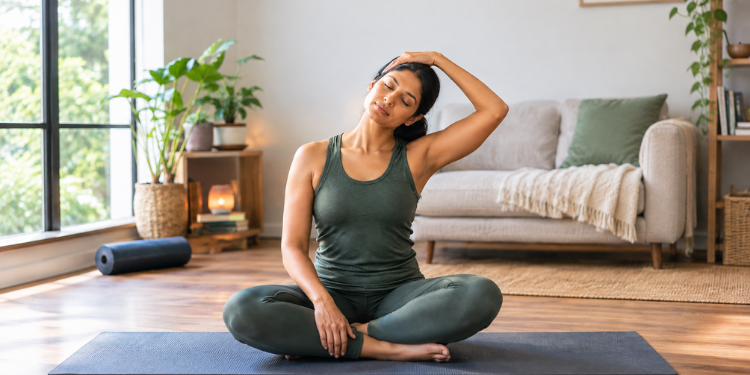
This is where somatic exercise is helpful. The movement is gentle, soothing and allows your body to release long-held stress.
So, what is Somatic Exercise?
There are very few exercises that are as unique as somatic exercise. It’s not the speed that counts. This is not an exercise that costs you everything or will get you to hit your heart rate as fast as you can; rather than high speed, focus on large movements and control.
The term “somatic” is derived from a Greek word meaning “body”. Somatic exercise is an exercise that goes beyond the physical – internal body awareness as opposed to the external. You are aware of the sensations in each movement, not of its appearance.
That is unlike a type of fitness program such as HIIT (High-Intensity Interval Training). HIIT is excellent for weight loss. It can also, however, induce further stress in the body. If an intense workout session is the first thing one does when they wake up in the morning, they may not be getting the rest they need.

Why Your Body Holds On To Tension
Consider the routine you have during the day. Wake up, sit for breakfast, sit in your car or bus, sit at your desk for hours and then sit again in the comfort of your home. Your hips remain flexed for the majority of the day. You slouch and lean your head forward when looking at screens. Your muscles will ultimately adapt to this setting and begin to stay in it.
This isn’t only the tightening of muscles. Your brain is involved as well. In times of stress, a person’s nervous system can enter what is known as a “high alert” state. When you’re not in danger, your muscles are ready for danger. This is understandable as a wellness concept, but it can sound like stress is literally stored inside muscles or fascia.
This is not an issue that can always be rectified with vigorous exercise. Actually, they may not make your body any more tense; you may feel more tense already and they are adding to that.
How does fascia fit into the picture?
Fascia is a thin layer of tissue that envelops your muscles, bones, and organs. It’s like a web that connects everything in the body. A healthy fascia will be soft and supple. However, when one sits too much or when one is sitting the same way all day, fascia can become stiff and “stuck.
Even if you have healthy muscles, stiff fascia can make you feel stiff. That is the reason why frequent stretching does not always seem to be of much benefit. A stretch will stretch the muscle, but it may not loosen the fascia below.
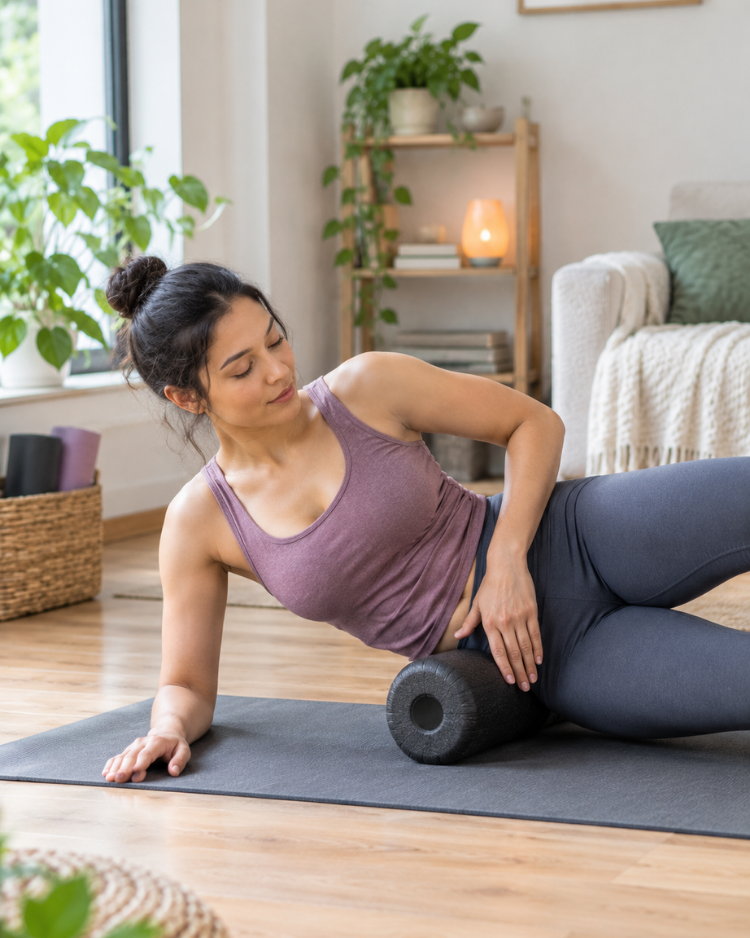
Slow, gentle movements or light pressure help this tissue relax and move fascia releases against. One way to do this is via foam rolling, but another is through somatic movement, which is a gentler and more mindful option.
How Somatic Movement Can Help
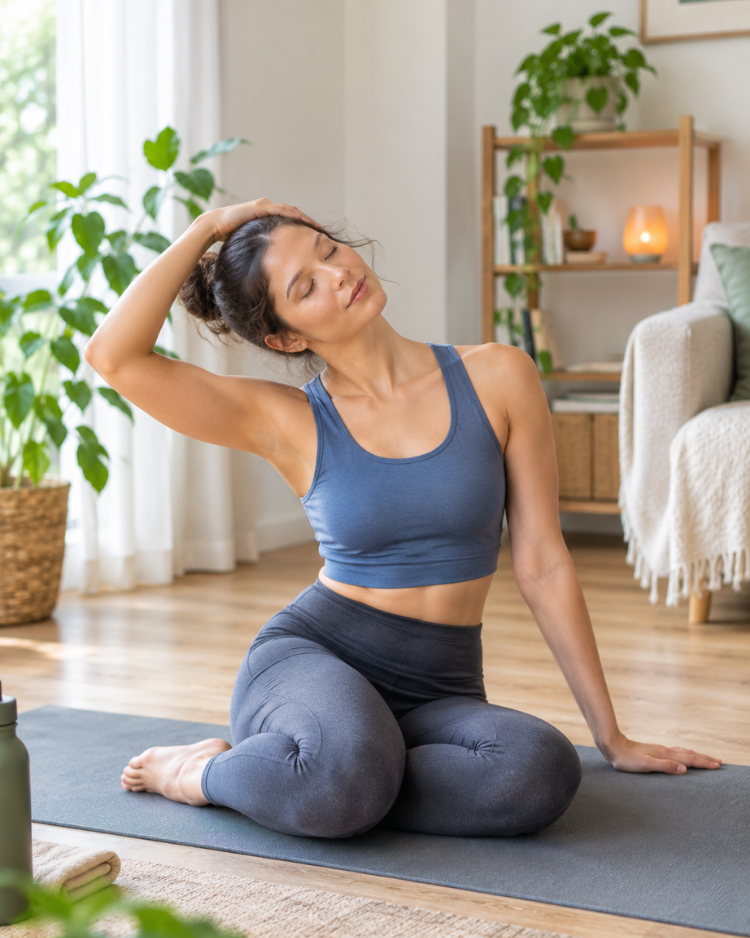
Somatic exercises are designed to “retrain” the communication between the brain and the muscles with slow, repeated movements. A stretch is made slowly as a joint is moved back and forth, while being monitored for any sensation. This is what happens with the nervous system over time; it learns to feel safe to relax that area.
These are some of the common somatic movements:
- Slow down the tilts of the pelvis when lying on your back
- Slow and easy turning and tilting of the neck.
- Hip movers to release tight hips
- To ease tension in the shoulder, make slow arm circles.
These movements may seem like too easy movements to be worth it. However, they affect your brain and nervous system, so they can cause changes that normal stretching can’t.
Target Audience?
Somatic exercises are particularly beneficial for:
- Those who sit for extended periods during the day or at their workplace
- Chronic neck or lower back tension may be felt
- Individuals who have had a high-stress or burnout episode or are in recovery.
- People who feel like they have to stop exercising after a hard session, but still want to get some exercise in.
- There’s no special equipment required. You don’t need any special equipment or to have a dedicated area. Sessions may last for only 10 to 15 minutes.
An easy way to start
If you want to know about the somatic movement technique, but you don’t have a lot of time, this is the place for you. Pick a muscle that is tight, like your neck or hips. Set the timer for 5 minutes. Slowly and without any rush, move that area. Try out how it feels for each little movement. Stretching has no goal to “achieve. The aim is just to be aware and kindly offer a relaxation of the tension.
Can be done in the morning before work or in the evening to relax. Many find that after they get used to slowing down, it becomes a favourite part of their day.
The Bigger Picture
When society all too often tells us to do more, do more, do faster, do more, sweat. But not always do you need it in your body. Sometimes, the best way to heal tight and tense muscles is through fewer movements.
There is another way, with Somatic exercise and Fascia release. They make us understand that being active isn’t just about strength and calories. It is also about paying attention to our body and giving it what it needs: space, patience and gentle attention.
If you’ve been having some tension for a while, perhaps it’s time to make some changes. Slow down. Breathe. Move gently. It just might give your body some much-longed-for relief.

















Discussion about this post