


This post is also available in:
 English
 Sinhala
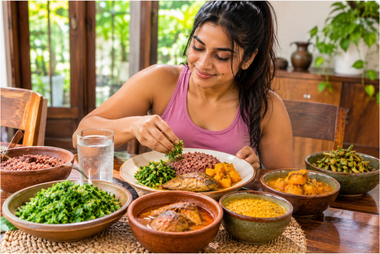
It is now 2 pm, and you have had a large meal of rice and curry. This was delicious, but now your eyes are tired, and you can’t concentrate. You might even feel like having a treat! This is the post-lunch crash and so many people are familiar with it.
Here is some good news. No dietary changes may be necessary. It might only be necessary to alter the order. This concept is known as “food sequencing” and is really appropriate for the Sri Lankan meal.
What is Food Sequencing?
Food sequencing involves consuming food in a specific sequence. The most popular order is:
- Focus on fiber, as in vegetables and leafy greens.
- Carbohydrates third.Protein and healthy fats second.
- Starches and sugars last
- No changes to food. Only the order changes.
Why order is important
Your body converts the starch in food, such as rice, to glucose, a form of sugar. Glucose is absorbed into your blood and your blood sugar increases. Rapidly increasing blood sugar causes the release of a high amount of insulin. This quick up and down may make you feel exhausted, hungry and confused.
Foods that are higher in fiber, protein and fat take longer to digest. The rice that follows them when consumed will be absorbed less quickly. This results in a more gradual increase in blood sugar.
What evidence has been found?
Multiple small trials have suggested that consuming vegetables and/or protein before carbohydrates reduced the spike in blood sugar following food intake. Some of the decreases were reported to be about 30 percent in some groups, primarily those with type 2 diabetes or prediabetes.
However, the studies conducted were small-scale, and results varied. So don’t anticipate that you will get the same score as they did. Consider food sequencing a low-tech, low-cost, simple habit that can support, rather than a cure-all solution.
Sequencing a Sri Lankan meal
All the parts needed for a normal plate of rice and curry are available. This is how it’s best to eat it.
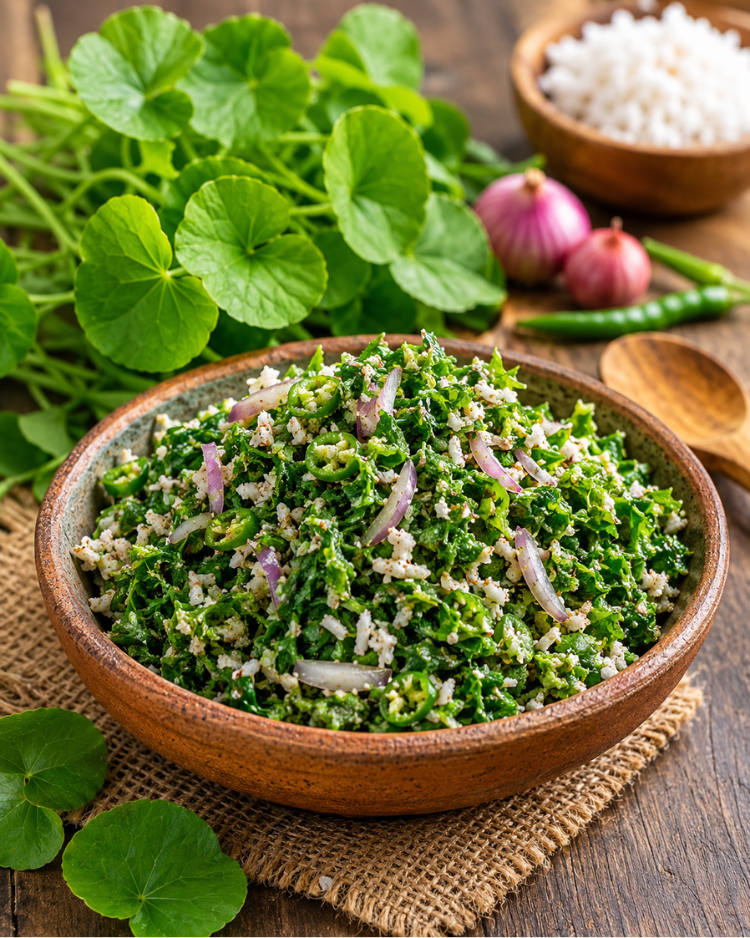
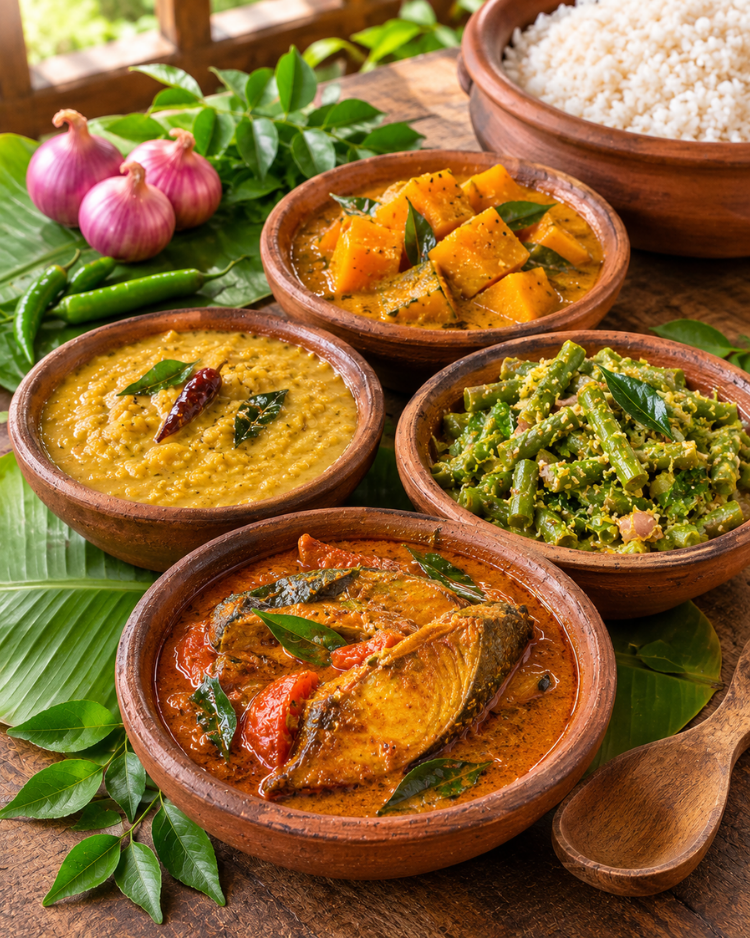
Step 1: Start with fiber. Start with gotukola, mukunuwenn, or kankun – mallung. Include vegetable curries, such as pumpkin, brinjal, aloo, or beans. A small side salad will do.
Step 2: Replace carbohydrates with protein and healthy fats. Have your fish, chicken, egg, or dhal curry. Coconut is a source of healthy fats in curries as well.
Step 3: Add the starch. Now you’ll have to eat your red rice. Eat a little at a time and savor with curry.
If you want to mix it up, you can still do so. The trick is to get in a good portion of the veggies and protein before the majority of the rice.
Why Red Rice Helps
Red and other less processed rice contains more fibre than white rice. This helps slow digestion even more. Go for red rice or red/white rice, if possible. Don’t portion it out too large either. All rice, even healthy rice, is a starch.
A Sample Lunch Plate
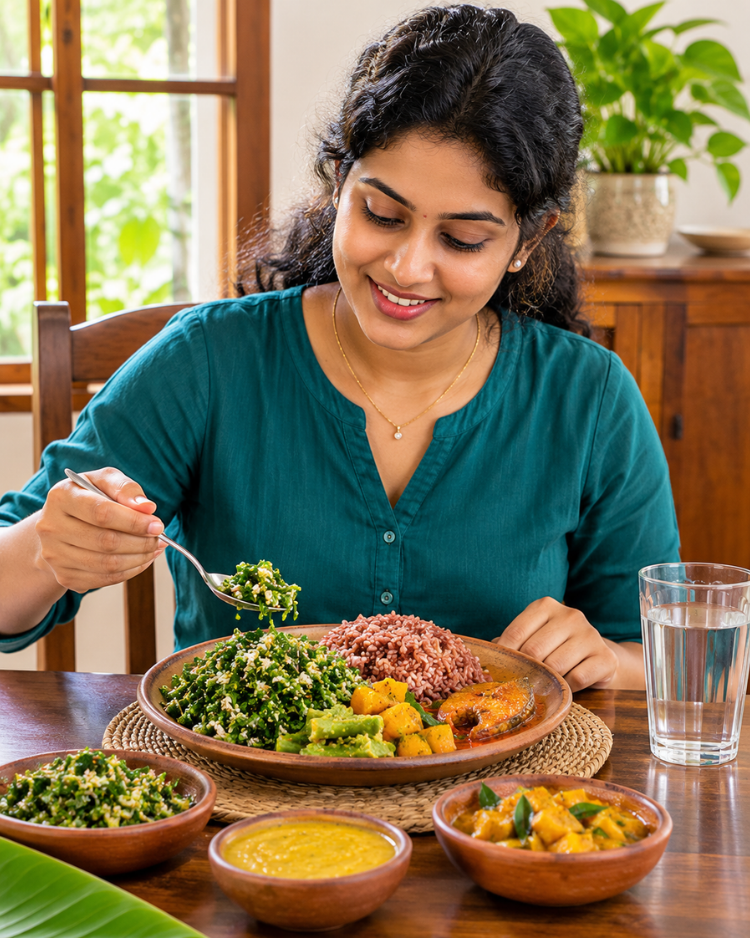
A well-rounded plate you could enjoy is below:
- Large quantity of gotukola malungga.
- 2 vegetable curries – for example, beans and pumpkin
- A piece of fish or an egg, or a serving of dhal
- A small bowl of red rice (rice balls)
- A little bit of sambol for seasoning
Fill one half of the plate with vegetables, 1/4 of the plate with protein, and 1/4 of the plate with rice.
Will it fit in my life?
Yes, and it can be done without special tools. Here are some suggestions:
At home: Eat the mallung and the vegetables first before the meat or fish, and take small bites.
Eat out or at work: When eating a lunch box on the go, first eat the vegetables and protein, then the rest. Don’t use the rice right away.
When eating at a restaurant or a buffet: Eat more vegetables before rice or have them as a salad or soup first.
When serving food at the family table: Serve the vegetable foods first and take your time.
What about Kottu, Biryani or String Hoppers?
It’s not always rice and curry. A lot of common foods are a combination of starch and protein. The same concept can still be applied.
Kottu: First eat the vegetables or pieces of egg/chicken and then the roti.
String hoppers: Begin with pol sambol, dhal and vegetable curry, then start eating hoppers.
Biryani: Start with the salad and raita, then the meat,t and lastly the rice.
If the food is thoroughly mixed together, then just include a side of salad or soup at the beginning of the meal.
Other habits that help:
It’s just one piece Food order. These can also help reduce the post-meal energy drop:
Go for a brisk walk after meals. Just a regular ten minutes can allow your muscles to consume some of the glucose.
Replace sweet drinks with water. Sweets in tea, soft drinks and juices can cause a rapid rise in blood sugar.
Eat slowly. It allows your body to get full.
Watch your portions. It’s still a large bowl of starch.
Common Mistakes
Not eating rice. There is no need to cut starch. Just eat it last.
Soaking vegetables in oil to prevent them from rotting. Use a light source for cooking.
Consuming dessert before the meat. After a meal, sweets can be eaten; before a meal, it’s not recommended.
Expecting a miracle. This is a beneficial habit, not a cure.
Final Thoughts
Eating food in a certain sequence is simple, free and in harmony with our eating habits. Begin with your mallung, then your protein, and end with your red rice. For many individuals, the afternoon is a more stable time of day.
Test it for 1 week, and see how you feel at 2 pm. In a person with diabetes, use a blood sugar medication or you have another health condition, consult with your physician or dietitian before altering your food intake.





















Discussion about this post