


This post is also available in:
 English
  Sinhala
Every year, thousands of Sri Lankan muscle men and women are faced with the same question during Ramadan. Do I keep training? Should I be absent for the entire month? Should I not eat breakfast and lunch during the heat of the day in Sri Lanka, will I forfeit all my progress?
Fortunately, you don’t have to compromise on your beliefs while exercising. But with a proper approach, you can continue to care for your body throughout Ramadan and more. All you need is a plan that is derived from the activities of your body while on a fast.
What happens to your body during Ramadan Fasting?
Fasting has several changes in the body that impact your training.
Shortly after Suhoor, your body uses up the glucose reserves as fuel. It starts to switch from using food as fuel to fat after a few hours of fasting. This is a great state to be in for fat loss and that’s part of why some fitness experts believe Ramadan (done right) can be a potent window for body recomposition.
But fasting isn’t a 24-hour protein diet, either. If protein is not provided regularly, muscle breakdown is possible, particularly during heavy training sessions. That is why it is extremely important to pay attention to the intensity of training during this month, as well as the type of food consumed at Suhoor and Iftar.
The other major factor is dehydration. The heat level in Sri Lanka is high. During the time of fasting, individuals may become fatigued, crampy, and dizzy while exercising and may actually perform much less during exercise than when it is not a time of fasting. It is not the end of training; it is the end of training for the wrong reason!
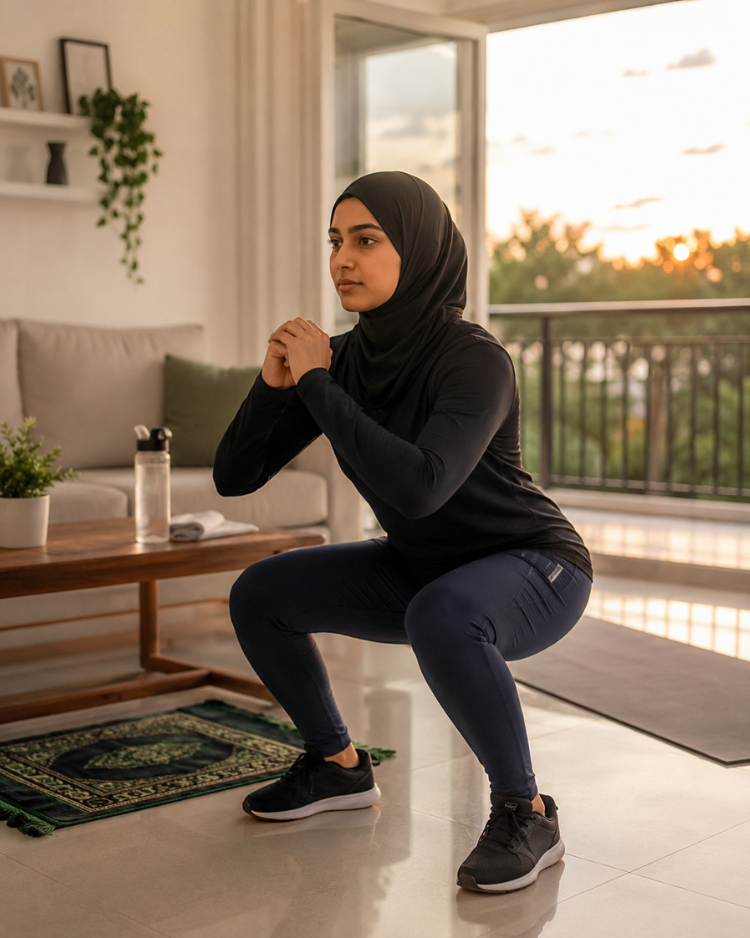
The best time of year to train in Sri Lanka is during the month of Ramadan
In Ramadan fitness, timing is crucial. There are three main Windows, and each of those Windows has its pros and cons.
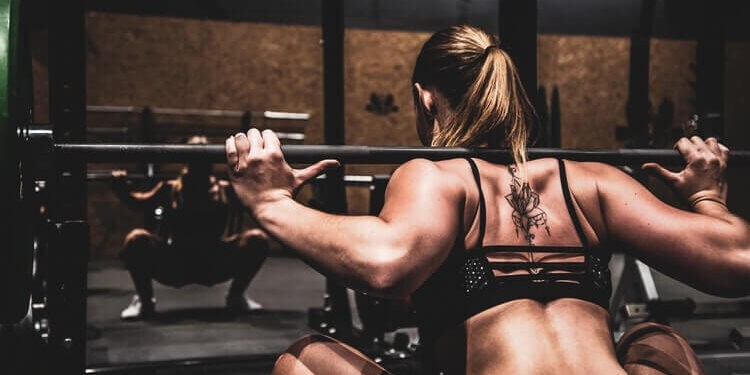
Just before Iftar is the most sought-after time for Sri Lankan Muslim gym-goers and with good reason. Training in the last 60-90 minutes before breaking the fast is the best time to consume food and water after exercise, when your body is most in need. The only thing is that this is when you’ve least energy in the day, so performing heavy lifting or high-intensity sessions will be a bit more difficult.
Another good alternative is after Tarawih prayers. Your body is nourished and watered. You have a normal level of energy. The cooler night air helps minimize the risk of dehydration. The biggest problem is timing: completing the workout after 10 PM/11 PM and then sleeping in enough before Suhoor is a real challenge!
For some, Suhoor is the best idea, as training before the pre-dawn meal allows them to fuel up and refuel right before and after exercise. This means getting up very early in the day and could affect sleep quality in the long-term.
The moderate time frame for most Sri Lankan Muslims to train is 60 to 90 minutes before Iftar during the month of Ramadhan.
What is allowed for suhoor in training?
The meal that is most important during a training Ramadhan is Suhoor, or the pre-dawn meal. It must offer an adequate amount of energy for the entire fast, a sufficient amount of protein for the protection of your muscles, and help to hydrate you for as long as possible.
Select slow-burning carbs for longer-lasting fuel. Foods that provide a slow release of energy include red rice, oats, or wholemeal bread, as the simple carbohydrates are burnt off quickly, so there will be a dip in energy in the middle of the day. Avoid refined foods, sweets, white bread at Suhoor, as it leads to a rapid rise in blood sugar followed by a sharp drop, which leads you to feel tired well before Iftar.
At Suhoor, protein is a must. During extended periods of fasting, your muscles will need amino acids to prevent the breakdown of protein; foods such as boiled eggs, canned fish, a cup of dhal, or grilled chicken will provide that. Try to get at least 30-40 grams of protein in this meal.
Consistently drink water between Iftar and Suhoor. Don’t drink all the water at once just before the beginning of the fast; your kidneys will not work fast enough. Otherwise, drink water frequently at night until well hydrated for Suhoor.

Recovering at Iftar: What to eat
Iftar is your time of recovery. Your body is at the most efficient state to absorb nutrients after it has been fasting all day and exercising. Take advantage of this time.
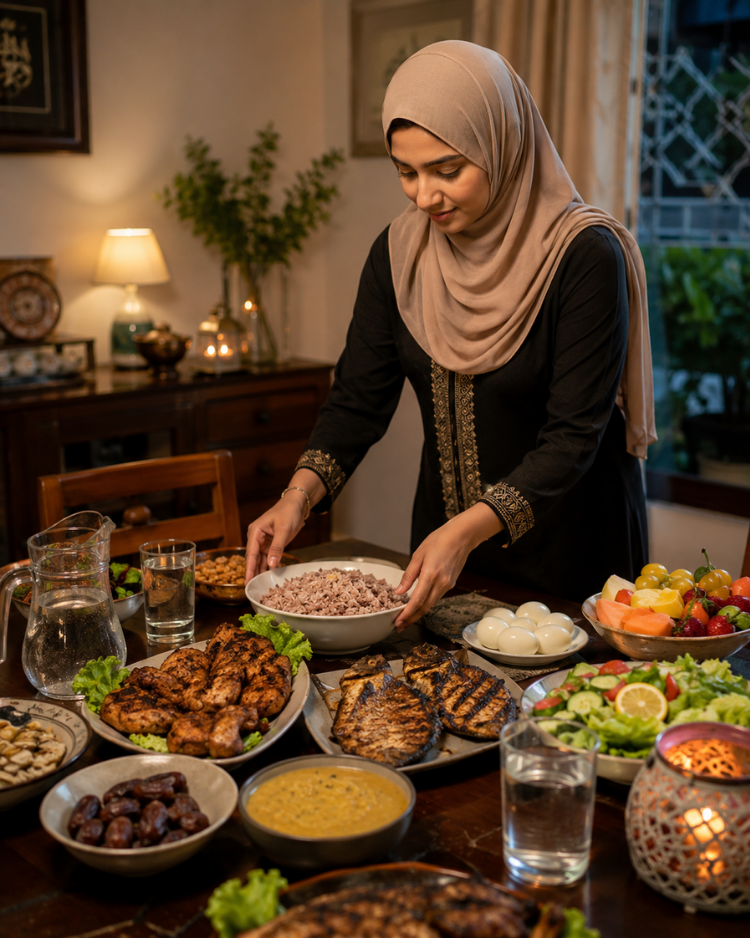
Fast the traditional way: dates and water. The dates are available in the form of glucose, which is released quickly in the body and helps to maintain blood sugar levels, and also gives a quick energy source to the drained muscles. In a few minutes, serve yourself your main meal.
Focus on protein at Iftar time. The main part of the meal should be fish curry, chicken, or eggs, rather than an accompaniment to a big plate of rice. Muscles are hungry for protein all day. Provide them with what they need.
Avoid overeating during Iftar. This is one of the most frequent mistakes to be made during Ramadhan. Eating a big meal right after exercise places a strain on your digestion, your sleep, and it would actually hinder recovery. Have a well-balanced, complete meal, not a feast.
Modifying the intensity of your training.
The time of Ramadan is not a time for setting personal records. Decrease the amount of training by approximately 30%. If you normally do 5 sets of an exercise, then do 3 sets. Train 3 -4 days a week if you train five days per week. The same movements, but fewer repetitions.
The objective in Ramadhan must be maintenance (maintaining strength and muscles) and the body should be able to cope with the extra demands of fasting. Post Eid, progress can be resumed.
The Bottom Line
You can keep up with the fitness routine, even during Ramadan. If you plan the right foods for Suhoor and Fajar, choose the right foods and with less intensity of training, you can come to the end of the holy month in good condition or even better.
There is no conflict between your faith and your fitness. They only require a plan that values both.
“During the month of Ramadan, this is a time of discipline, patience and gratitude. The same attributes that develop a strong body are the same that develop a strong mind. Go through them all with practice for this month.”









Discussion about this post