


This post is also available in:
 English
  Sinhala
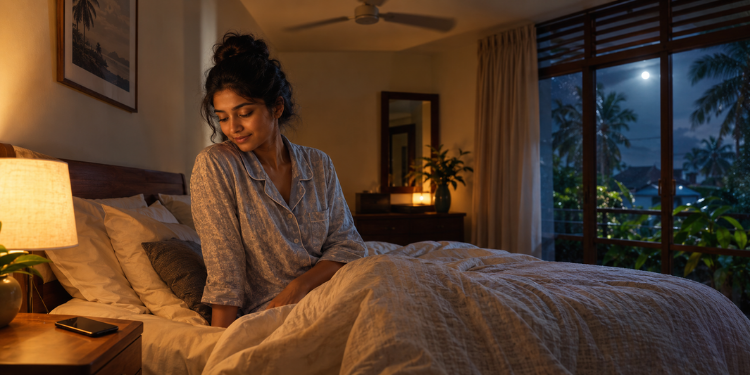
You have a decent bedtime. You sleep for an entire night of eight hours. Still, you feel like you’re getting less sleep than is optimal. If this resonates with you, it could not be about the amount of sleep you’re getting; it could be about the quality of sleep you are getting.
This is where circadian health comes in. Your body is like a clock; it has a clockwork schedule. Your body’s clockwork schedule is known as your circadian rhythm. It regulates whether or not you feel awake, sleepy, and how well your body repairs itself while sleeping. While many people may not realize it at first, several habits that they engage in on a daily basis in the tropics can unknowingly disrupt this clock.
What is Circadian Health?
Your biological clock is about a 24-hour period. It’s influenced mainly by light and darkness. If you’re seeing bright light, your brain thinks it’s daytime and is alert. As the light dims, your brain begins producing the hormone melatonin, letting you know it’s time to be sleepy and sleep.
This system has been developed over thousands of years and utilises the natural light and darkness. But modern life, particularly in sunny, damp, tropical conditions, has altered all that.
The Problem With Indoor Blue Light
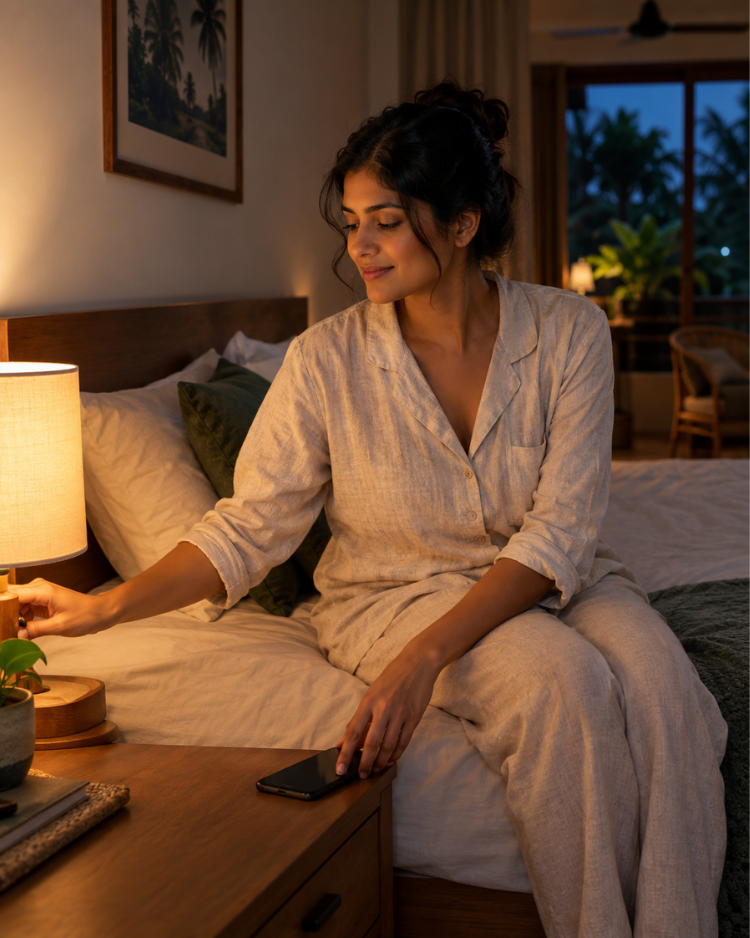
Phones, laptops, TVs, and bright lights indoors. Many of these emit blue light, which is similar to daylight. Exposing your brain to blue light in the evening confuses your brain. It believes it’s still daylight, and as a result, it doesn’t release melatonin.
This is particularly prevalent during the evening, when many people tend to unwind by scanning their phones or watching television before going to sleep at night. The strong, direct, close-to-the-face display signals to your brain to remain alert when your body needs to be at rest for deep sleep.
This is because over time, this delay in melatonin can result in lighter, less restorative sleep, even as you sleep for eight hours.
Late-Night Heavy Suppers
Dinner is sometimes the heavier meal in many Sri Lankan households, and is eaten late at night, often at bedtime, with a good curry, some fritters or a large plate of rice.
Having a large or heavy meal more than usual near bedtime can make it harder to fall asleep because your digestive system will be busy breaking down the food. Your body can’t focus on digestion while it’s also working on the healing and repair work that occurs during a good night’s sleep, such as maintaining the balance of hormones and muscle growth.
This may lead to poorer quality sleep, increased tossing and turning, and decreased overall sleep efficiency.
It’s a tropical heat factor!
Sri Lanka’s humid and hot climate is another challenge. Your body’s temperature is a key factor in getting into the deep sleep stage. This is more easily accomplished in cooler climates. However, if your bedroom is hot and humid, your body could have a difficult time attaining that desired cooler temperature and would find it harder to drift into deeper sleep stages.
That’s why it can be particularly hard for many people to get a good night’s sleep in the hot summer months or in rooms that are not air-conditioned, especially when they are physically exhausted.

Why This Matters for Recovery
Deep sleep is not a sleep of the blind. It is involved in a significant way in:
Under the title of “Muscle Recovery and Repair,” it is important for all of those who exercise regularly.
Hormone regulation: hunger and stress hormones
The ability to process memory and concentration.
Metabolic health: the ability of your body to control blood sugar
Without adequate rest for the body to go through these important repair stages, disruption from light, late heavy meals, or heat will prevent this. This can impact your mood, focus and fitness gains over time, and your energy levels.
Simple Night-Routine Adjustments
It isn’t necessary to completely change your lifestyle to make improvements to your circadian health. There are some small, real-world adjustments that can make a huge difference.
- Turn down the lights at night. Reduce indoor lights and dim the screens about 1-2 hours before sleep. Turn on night mode or a warmer light setting on your phone if you can.
- Use a screen cut-off time. Put away your phone or laptop at least 30 minutes before bedtime. Your melatonin levels can be boosted naturally, even by stepping away from screens for a few hours.
- When possible, have dinner earlier. Eat your main meal 2-3 hours prior to sleep. If dinner is to be postponed, then try a lighter meal to improve digestion.
- Cool down the sleep environment. Cool down with a fan, open windows, or take a lukewarm bath or shower before going to sleep to help the body cool.
- Get morning sunlight. As evening light can make it harder to press ‘sleep’ on your body clock, morning light will reset it. 10 to 15 minutes of fresh air in the morning will help you sleep better at night.
A Glacial Retrogression for Improved Recovery
There’s no need for costly gadgets or radical changes in lifestyle to achieve healthy circadian health. It begins with a series of step-by-step changes in how you spend your light hours, when you eat, and what you do before going to sleep.
Such small changes are even more significant in a tropical country such as Sri Lanka. The key is to set up your environment to help you fall into deep sleep, so you can do this by reducing your room’s lighting, switching to a little earlier dinner time and cooling your bedroom down.
It’s not only for better sleep. It’s for better recovery, better focus and more energy to help you through your busiest days.















Discussion about this post